
How to Ship Board Games from China
 By Hersh Glueck
Most board games ship from the factory in China by sea, packed in cartons on pallets, to a warehouse or straight to your backers. To ship board games well, you make four choices: how they are packed, sea or air, who handles customs, and where the games go. Many creators also skip the regional warehouses and ship each game to its backer straight from China. This guide shows how to ship a board game print run step by step, and links to the detail.
The Journey From the Factory to Your Door
- Factory to consolidation warehouse: the finished games go to a warehouse in China.
- Loading: they share a container with other shipments, or fill their own.
- Export customs: China clears the goods to leave.
- Sea or air freight: to the destination port or airport.
- Import customs: the destination country clears them in, and duty and VAT are paid.
- Delivery: a full container goes straight to your warehouse; smaller shipments go through a sorting warehouse first.
The four steps below are the choices you make along the way.
Step 1: Pack the Games for the Journey
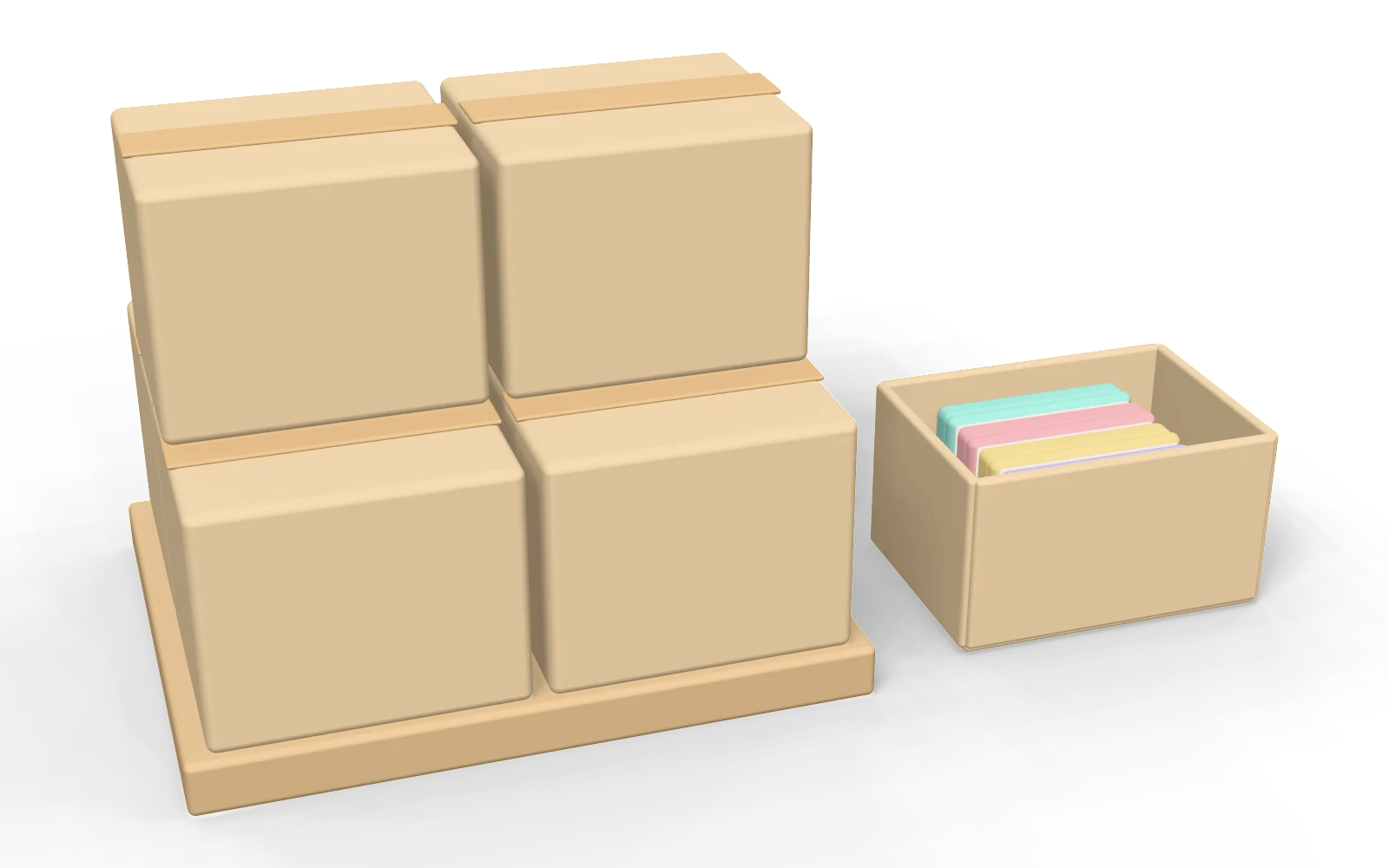
Games travel in strong cartons, and the cartons usually travel on pallets. Each carton holds 12 to 18 kg, as close to 15 kg as possible, and the game boxes stand on their sides, never flat. How many fit depends on the box:
- about 96 tuck-box card games per carton;
- about 48 small two-piece boxes;
- about 20 medium two-piece boxes;
- about 8 large two-piece boxes.
Cartons can have reinforced edges, part and full container loads usually go on pallets, and fragile goods can travel in a wooden crate. Our guide to board game shipping cost lists the prices. Pallets protect the games best: parcel channels without pallets can see damage of up to 3%, against under 1% on pallets.
Step 2: Choose Sea or Air
Sea freight is the normal way to ship a print run: it takes weeks, but costs far less per kilogram. Air freight takes days, and suits small, urgent shipments. Our guide to air freight vs sea freight gives the transit time and rate for every method and zone.
Step 3: Decide Who Handles Customs
Most creators choose DDP (delivered duty paid): we deliver to your door with customs cleared and duty and VAT paid. Our logistics partner, Prime Ship, acts as the importer on its own customs bonds. So you do not need an import licence of your own, and nobody gets a surprise bill at the door. If you have your own forwarder, you can choose FOB or EXW instead. Our guide to shipping terms explains every option.
Step 4: Decide Where the Games Go
Games go to one of three places: your own warehouse, a distributor or Amazon, or straight to your backers. For a crowdfunding campaign, the last one is called fulfilment, and there are two ways to do it:
- Through regional warehouses: the games travel by sea to warehouses in the US, Europe, the UK and Australia, clear customs in each, and are sent on to backers from there.
- Straight from China: the games are packed for each backer in China, right after production, and shipped by air to their doors, duty and VAT paid.
Fulfilment from China is often simpler and faster. There is no sea freight or customs clearance in each country, and one warehouse handles everything, from pick and pack to labelling. There is one fee instead of several, and no 40-day wait at sea. Our guide to Kickstarter fulfillment explains both ways.
The HS Code for Board Games
The board game HS code is 9504.90. HS codes (Harmonized System codes) are the numbers customs uses to classify goods, and 9504 covers table and parlour games. Your quote and shipping papers carry the code, and some countries add more digits after it. The code decides the import duty, so check it with your forwarder for each market.
Duties, VAT and GST by Market
Import VAT or GST is charged on the value of the games when they enter a market. The usual rates:
- European Union: 17% to 27%, depending on the country.
- United Kingdom: 20%.
- Australia: 10% GST.
- New Zealand: 15% GST.
- Canada: 5% GST, plus provincial sales tax in most provinces.
- United States: no VAT, but state sales tax when you sell, and import tariffs on goods from China.
Import duties and tariffs change often, so check the current rate before you order. With DDP shipping, all of it is paid on the way in. Once VAT is paid on entry to a zone, sending games on to backers inside the same zone adds no more import VAT.
Mailing Single Games in the US: Media Mail Is Not Allowed
Can board games be shipped Media Mail? No. USPS Media Mail is only for books, recordings and similar media, and games do not qualify, even educational ones. If a parcel is opened and found to be a game, the receiver can be charged the difference to a higher service. So media mail board games are a risk, not a saving: use USPS Ground Advantage or Priority Mail instead.
What Goes on the Box and the Carton
Every game box shows where it was made, for example "Made in Yiwu City, China", plus the age, the publisher's address and, for children's games, the warnings and safety marks for each market. Our guide to board game box labels and warning signs lists every line. Shipping cartons need no barcode, unless your warehouse asks for one; a simple UPC on the carton is enough for its own tracking.
Check Out Our Free Resource: Shipping and Fulfillment Fundamentals by Prime Ship
How shipping and fulfilment work, from the factory to your backers, step by step.
We handle the whole route, from packing in our factory to your warehouse or your backers' doors. To plan the shipping for your game, contact us.
Frequently Asked Questions
How do I ship board games from China?
Should I ship by air or by sea?
How much does a board game weigh?
What is the HS code for board games?
Can board games be shipped by Media Mail?
Do I need an import licence to import board games?
Talk to Our Team About Creating Your Board Game
From design to manufacturing, we can help you with every aspect of turning your game concept into reality.