
Board Game Graphic Design: Who Does What
 By Hersh Glueck
Board game graphic design is the work of turning artwork and rules into components that players can read and a factory can print. It is not the same job as drawing the art. The artist paints the pictures; the graphic designer decides where they go, adds the frames, icons and text, and sets every file up for print. A game also needs design work beyond the cards: the box, the rulebook layout, the cut lines of shaped pieces, the 3D models of plastic pieces, the insert, and the images that sell the game. This guide lists each job, what it delivers, and the mistakes that cost the most time.
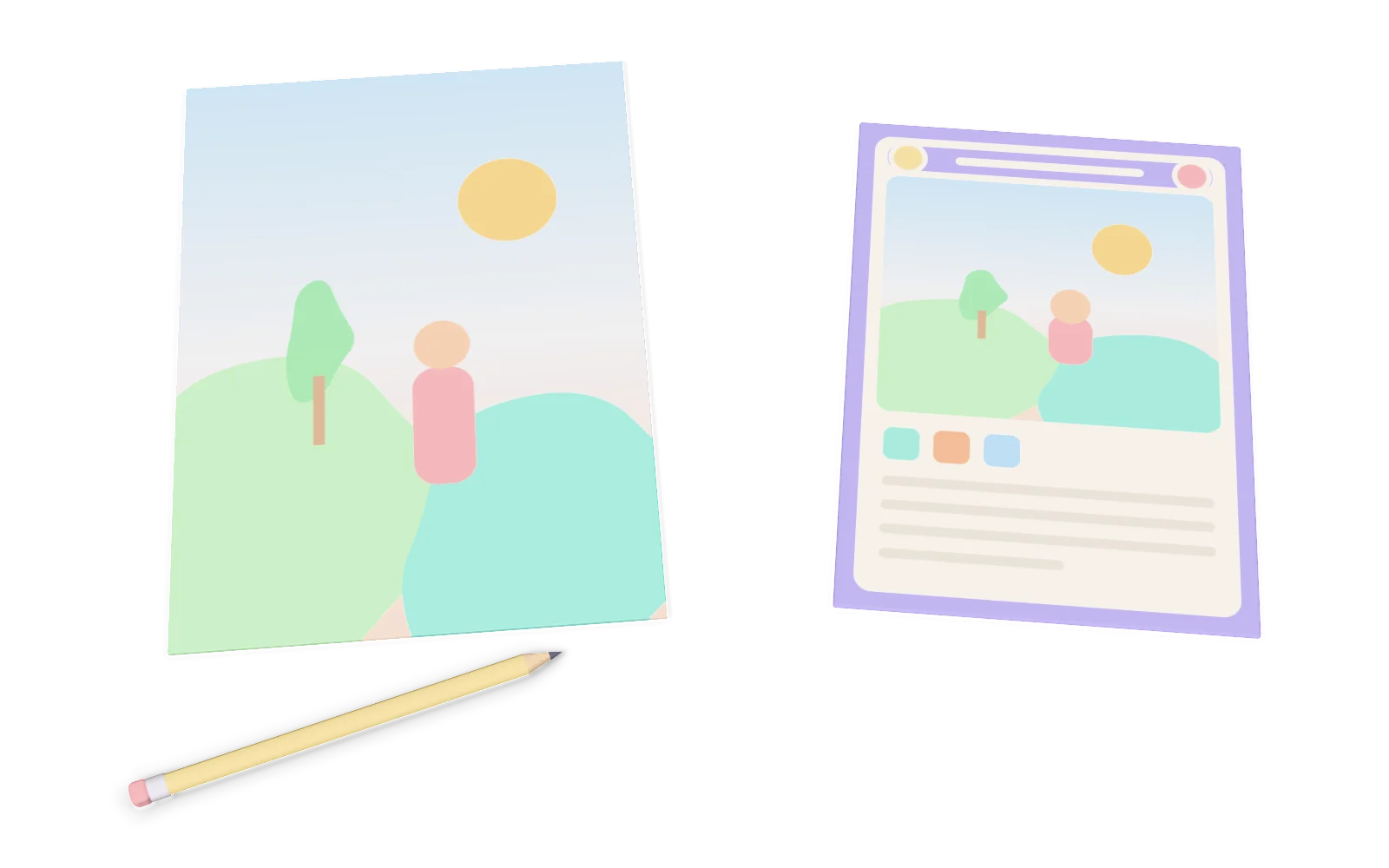
Artist vs Graphic Designer
The artist creates the pictures, and the graphic designer builds the components around them. Graphic designer vs illustrator is the most common confusion in a first game, and it causes real problems: a beautiful painting with no room for the text, or icons that change size from card to card. The illustrator works on the assets: characters, scenes, the box cover. The board game graphic designer works on the system: the card template, the icon set, the fonts, the colours, and the print setup. Some people do both, but they are two skills. If you hire one person, ask which of the two they are really good at. How to find and brief the artist is in our guide to the board game artist.
The Design Jobs a Game Needs
A finished game needs up to eight kinds of design work. Small card games need the first three; a large crowdfunded game with miniatures needs all of them.
- Component layout (the core graphic design): card, board, token and player board templates: frames, icons, fonts, text, colour. File: Illustrator (AI).
- Box design: cover layout, the back with photos and selling points, the sides, logo, barcode and safety marks. File: AI on the box template.
- Print setup (prepress): every file at real size with bleed, CMYK, layers and outlined text. File: AI, editable PDF.
- Rulebook layout: pages in multiples of four, examples, diagrams, the components list. File: InDesign (INDD), PDF.
- Cut lines and CAD: the exact outline of shaped tokens, standees, wooden and acrylic pieces. File: CAD, AI or SVG.
- 3D design: models of miniatures and plastic pieces that a mould can release; insert layouts. File: STEP or STL.
- Advertising design: banners, social posts, email images and the sell sheet, built from the game's own art. File: PNG, JPG at screen sizes.
- Crowdfunding design: the campaign page: header, main image, pledge tiers, stretch goals, add-ons. File: PNG, GIF.
Each job has its own guide. Print setup is in our print-ready artwork setup guide; cut lines in what is a CAD file; 3D models in STL vs STEP; inserts in board game insert design; the rulebook in board game rulebooks; and the box cover in board game box design.
What Good Card Layout Does
Good layout lets a player understand a card in a second, from across the table. That is the heart of board game card design, and it rests on five habits:
- One template for every card of a type. The title, cost and text sit in the same place on every card, so players learn where to look. Designers call this a grid.
- The most important thing is the biggest. Cost and effect come first, flavour text last. This is the card's information hierarchy.
- Icons instead of words where possible. One clear icon set, used the same way everywhere, makes the game faster and easier to translate. This is iconography.
- Readable type. Fonts big enough to read at arm's length, dark on light, never small text over busy art. This is typography.
- Colour that also works without colour. Pair every colour with a shape or symbol, so colour-blind players can play too.
Together these make up the game's user interface (UI): the way the components tell the player what to do. Playtest the layout, not only the rules: a card that players misread is a design bug.
Common Mistakes in Board Game Graphic Design
Most graphic design problems we see in files come from six mistakes:
- Treating art and graphic design as the same job. They are different skills; plan and budget for both.
- Doing it yourself with no guidance. It is possible, but learn the print rules first, or the files will need setup work later.
- Icons and text out of line. Without a grid, elements drift from card to card, and the factory cannot fix it.
- Artwork at the wrong size. Art that does not cover the bleed, or is the wrong ratio, gets cut badly.
- Colours that are not balanced. RGB files, heavy ink on large areas, and colours that do not match between components.
- Too many layers and effects in the wrong program. Gradient meshes, transparency and effects that only Photoshop handles well, built in Illustrator, make heavy files that are hard to print.
The fix for most of them is to check the files early. We check your files for free before printing and send a report of every issue, and our Artwork Set Up Guide video playlist shows how to avoid each one.
Who Can Help
If you need a board game graphic designer, work with someone who knows print, not only screens. We do not have in-house artists; we work with freelancers we trust and introduce them to our clients. For 2D artwork and layout, and crowdfunding page design, that is Rob Ingle, a lead artist and designer with more than 15 years in the board game industry. For 3D models of miniatures and plastic pieces, it is Jordan O'Neill. Both are based in the UK. Freelancers charge by the hour or by the project; what that costs is in our guide to the board game artist. To be introduced, contact us.
Frequently Asked Questions
What does a board game graphic designer do?
What is the difference between a graphic designer and an illustrator?
Does a board game need a graphic designer?
What design work does a crowdfunded game need?
Talk to Our Team About Creating Your Board Game
From design to manufacturing, we can help you with every aspect of turning your game concept into reality.