
Foldable Game Boards: Folds, Sizes, Materials and Finishes
 By Hersh Glueck
A foldable game board is the shared playing surface that opens out in the middle of the table and folds down small enough to fit in the box. It is one of the largest components in most board games, and one of the most technical to make: the fold pattern, the size, the cardboard, the paper, the lamination and the way each fold is cut decide how the board looks, how long it lasts and what it costs.
This guide covers the technical side of foldable game boards: the fold types, the sizes that fit our printing sheets, what boards are made of, finishes, how the folds are made, and how to keep a board flat and in one piece. Designing the board as your game’s centrepiece is a separate subject, covered in our guide to game board design.
Check Out Our Free Resource: Guide For Selecting Components
This guide helps board game designers select ideal components and quantities.
What Is a Game Board?
A game board is the shared surface a board game is played on: the game map, the score track, the layout where pieces move and cards are placed. It sits in the middle of the table, and it is usually the first thing players see when they open the box. Games that need a different layout every time use modular map tiles instead of one board.
When a board is bigger than its box, it folds. A foldable game board (also called a folding game board) is made of rigid cardboard panels joined by fold lines, the hinges, so it opens flat for play and closes into a fraction of its size for storage.
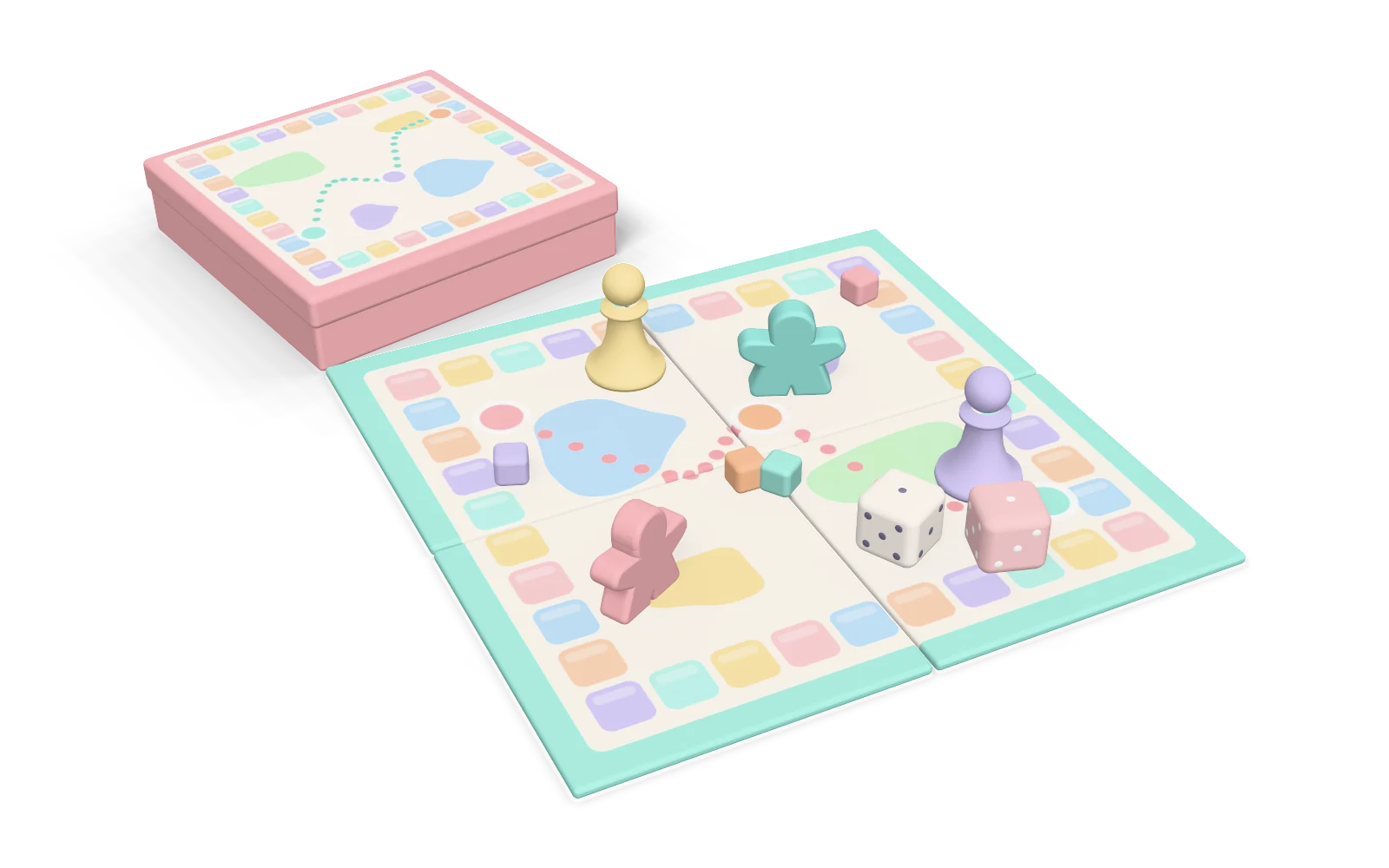
Foldable Game Board vs Player Board
The two are easy to confuse, but they are different components. The game board is the shared main board in the middle of the table. Player boards are each player’s own smaller boards, usually one flat panel that doesn’t fold, where players track their own resources and progress. Player boards are made like other single-layer cardboard pieces, without a wrapped edge, so everything in this guide is about the shared, foldable game board.
Types of Foldable Game Boards
The fold type sets how many panels the board has, how small it folds and which box it fits. Hero Time makes boards from no fold up to eight fold sections, and the price does not change with the number of folds: two, four, six and eight folds are all cut in one stamping pass (die cutting).
Swipe or scroll sideways to see all six fold types:
No-Fold Game Board
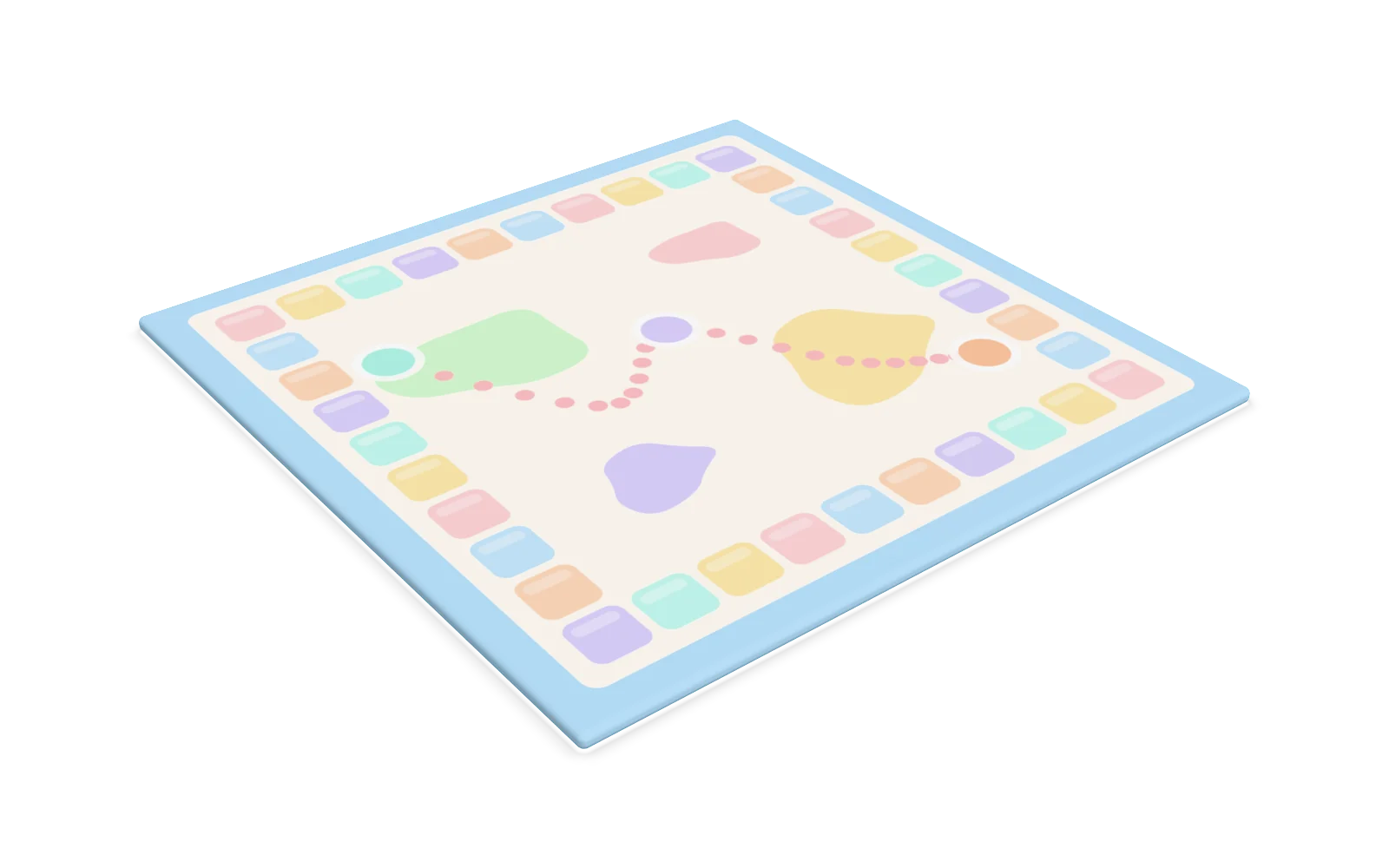
A no-fold game board is one flat piece of cardboard. It is the simplest board to make and gives a play surface with no creases at all, which is why some premium editions use one. There is no fixed maximum, but we recommend staying within 280 × 280 mm (11 × 11 in): a bigger single piece becomes less stable and wastes material.
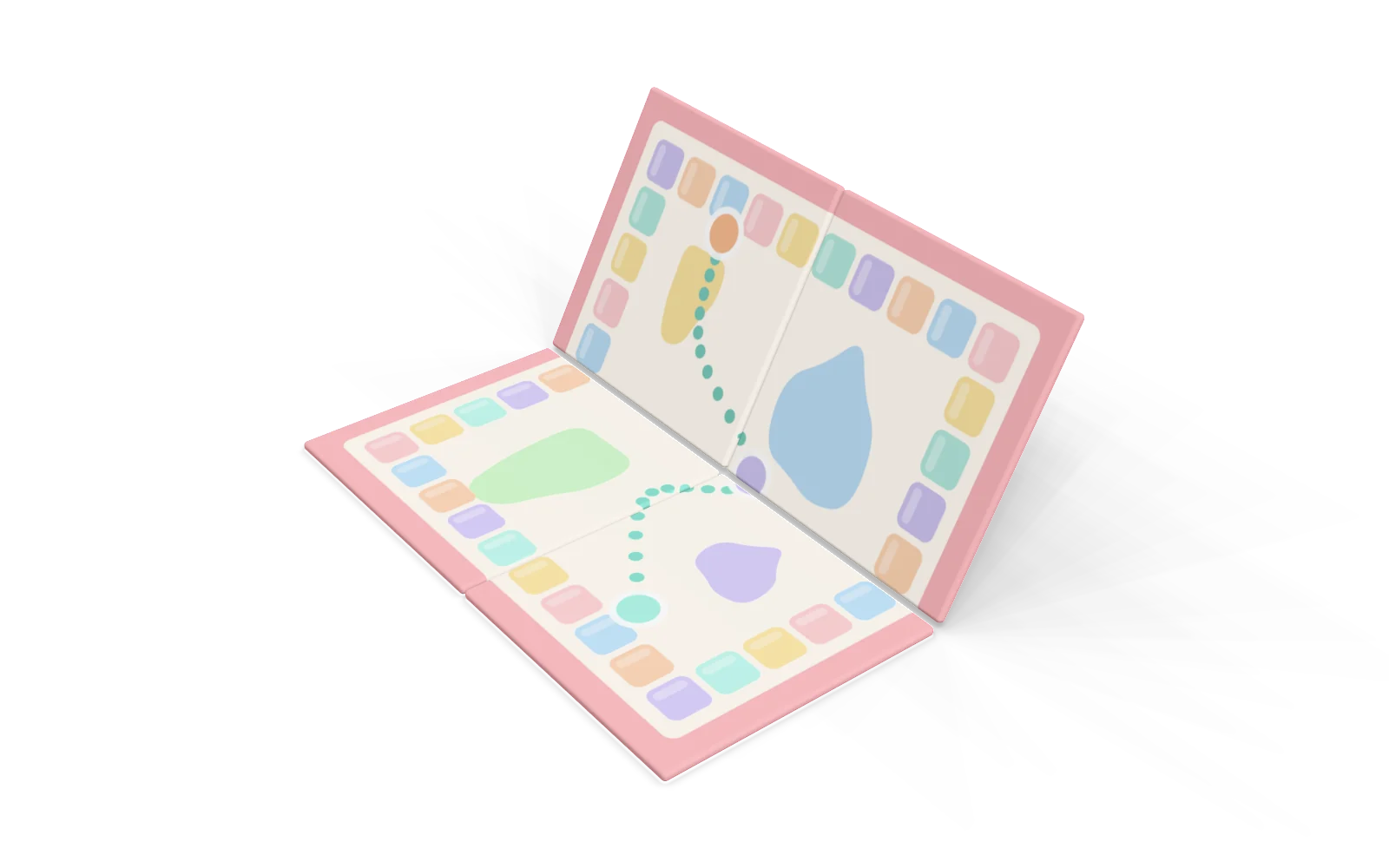
Bi-Fold (Single-Fold) Game Board
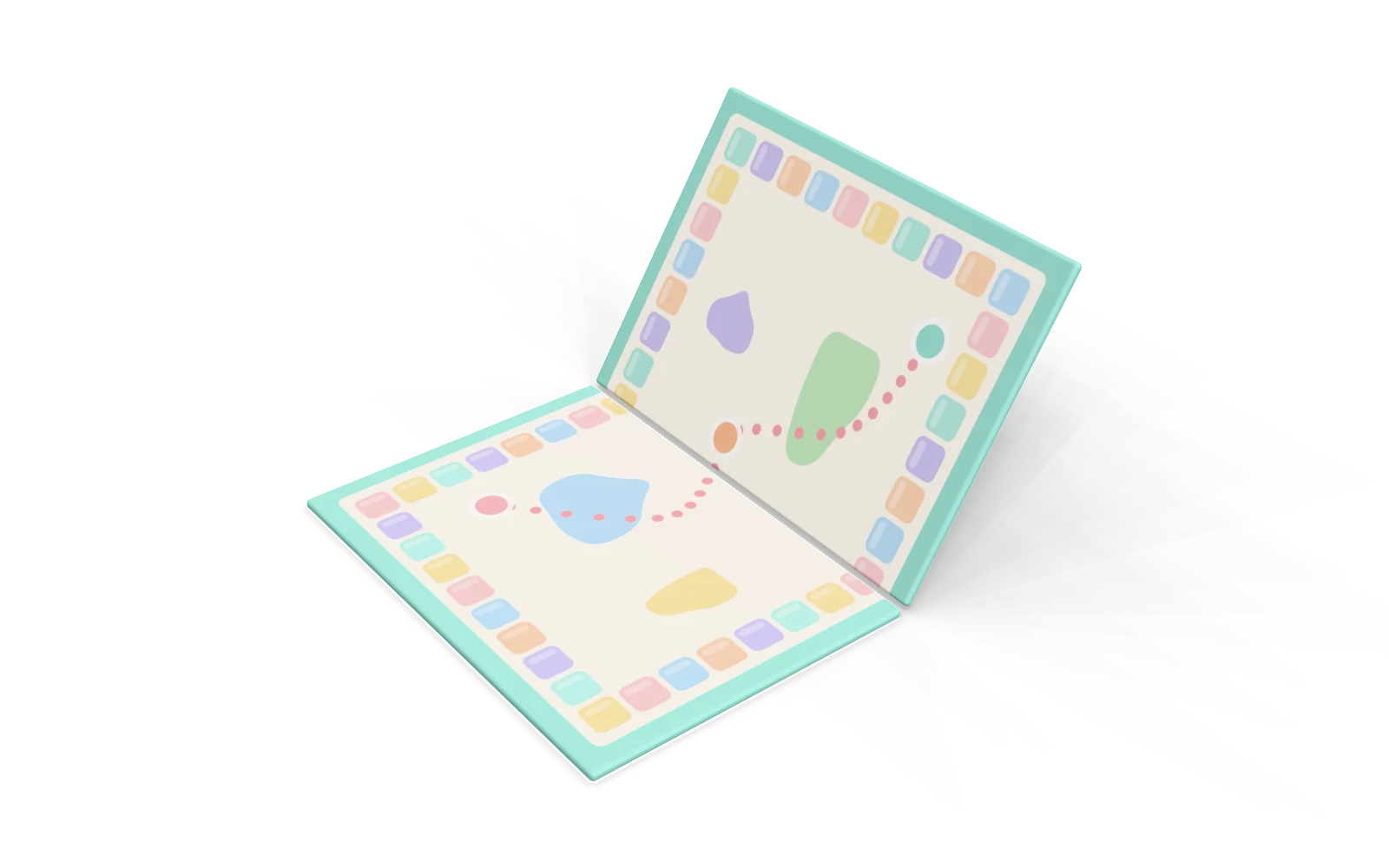
A bi-fold board has one fold down the middle and two panels, like the board in Scrabble. It can fold horizontally or vertically, and because it stays longer than it is wide when folded, it suits a rectangular box.
Tri-Fold (Accordion) Game Board
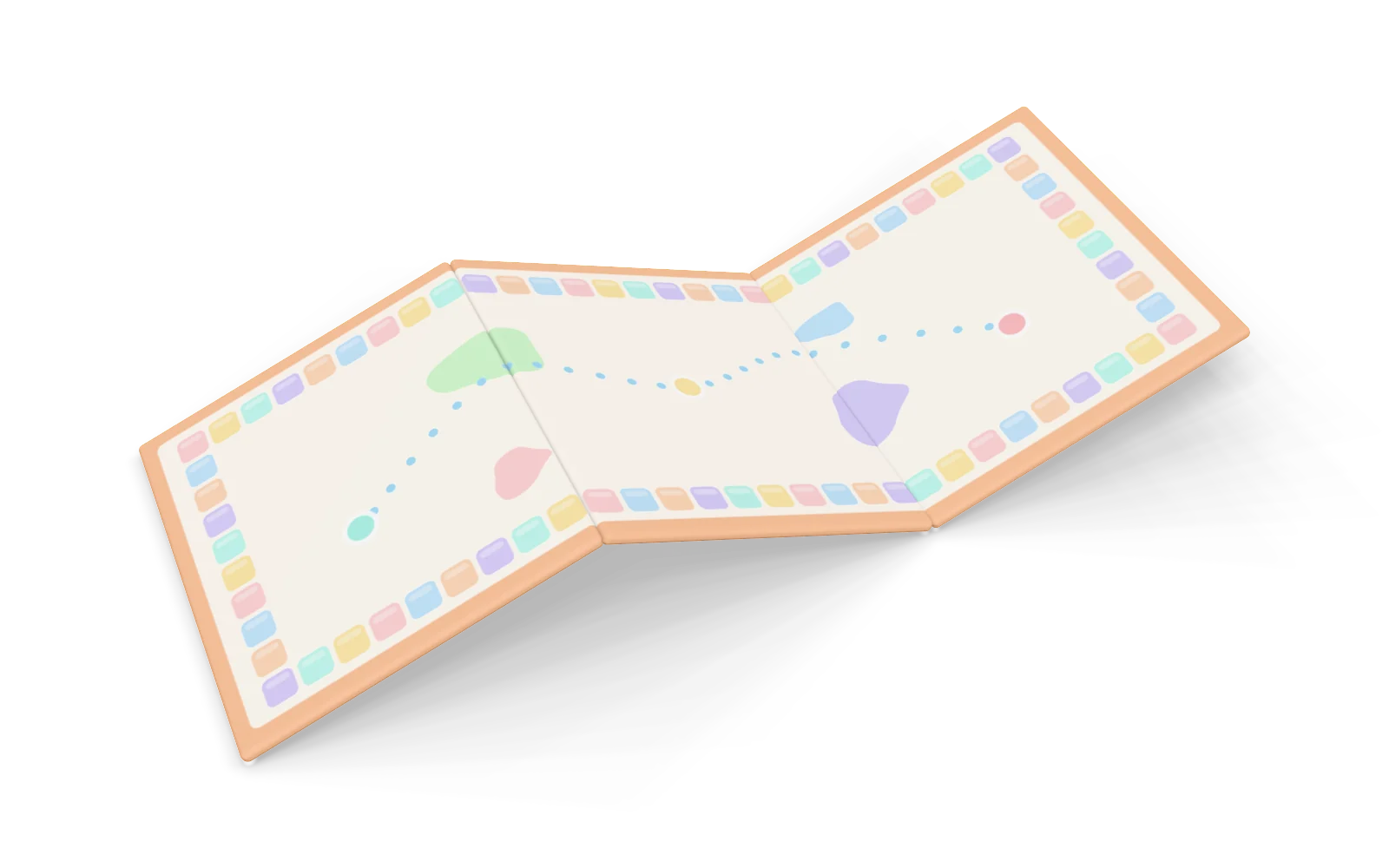
A long, narrow board where only the length needs folding uses a zigzag fold, also called an accordion fold. Three panels is the standard zigzag, and four panels along the length is also possible, at no extra cost. It is perfect for longer, narrower boards.
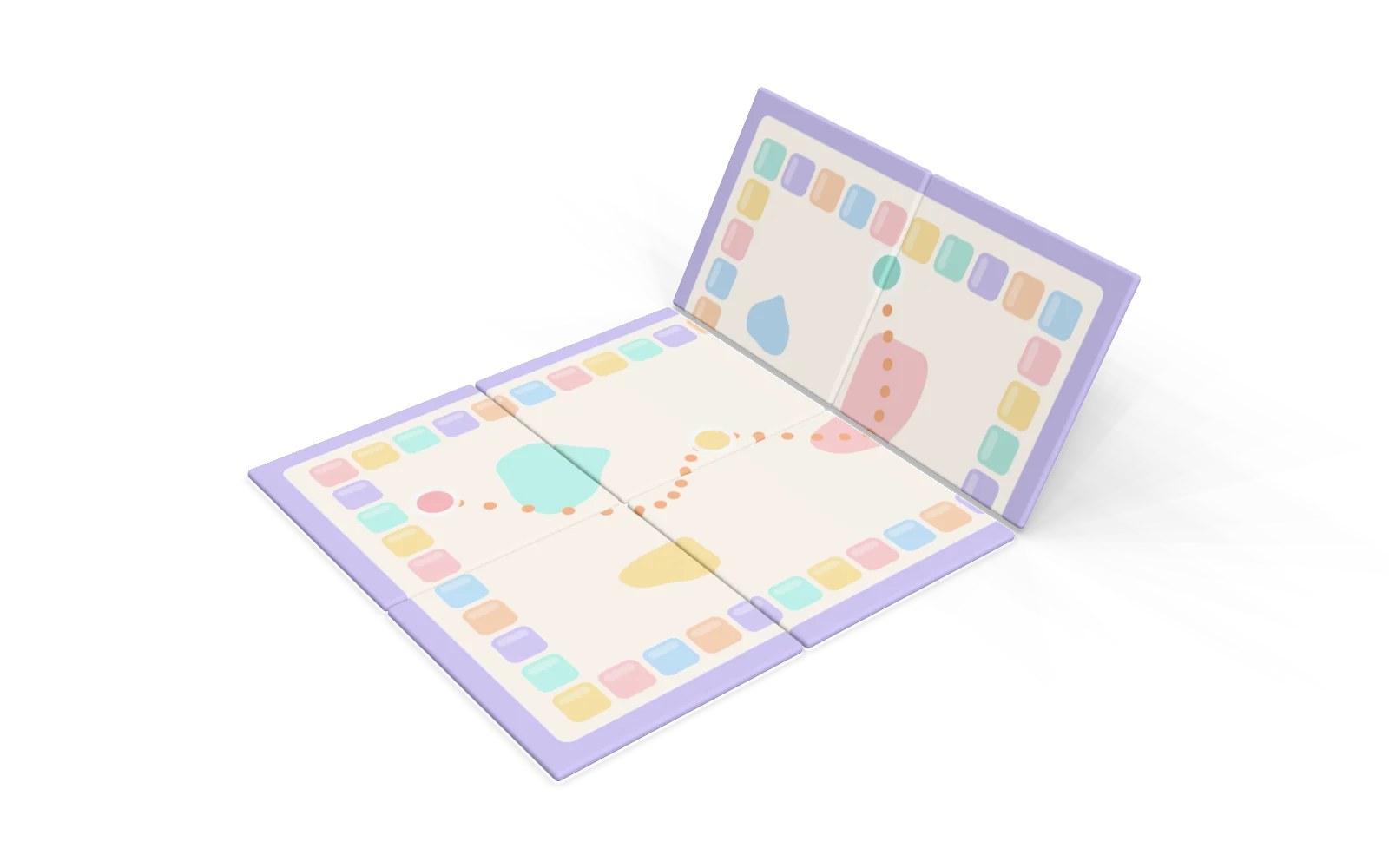
Quad-Fold Game Board
A quad-fold board has four panels, two by two, and folds down to a quarter of its size, like the board in Monopoly. Because it keeps its proportions when folded, it is the best choice for a square board. It has more fold lines across the play surface than a bi-fold board.
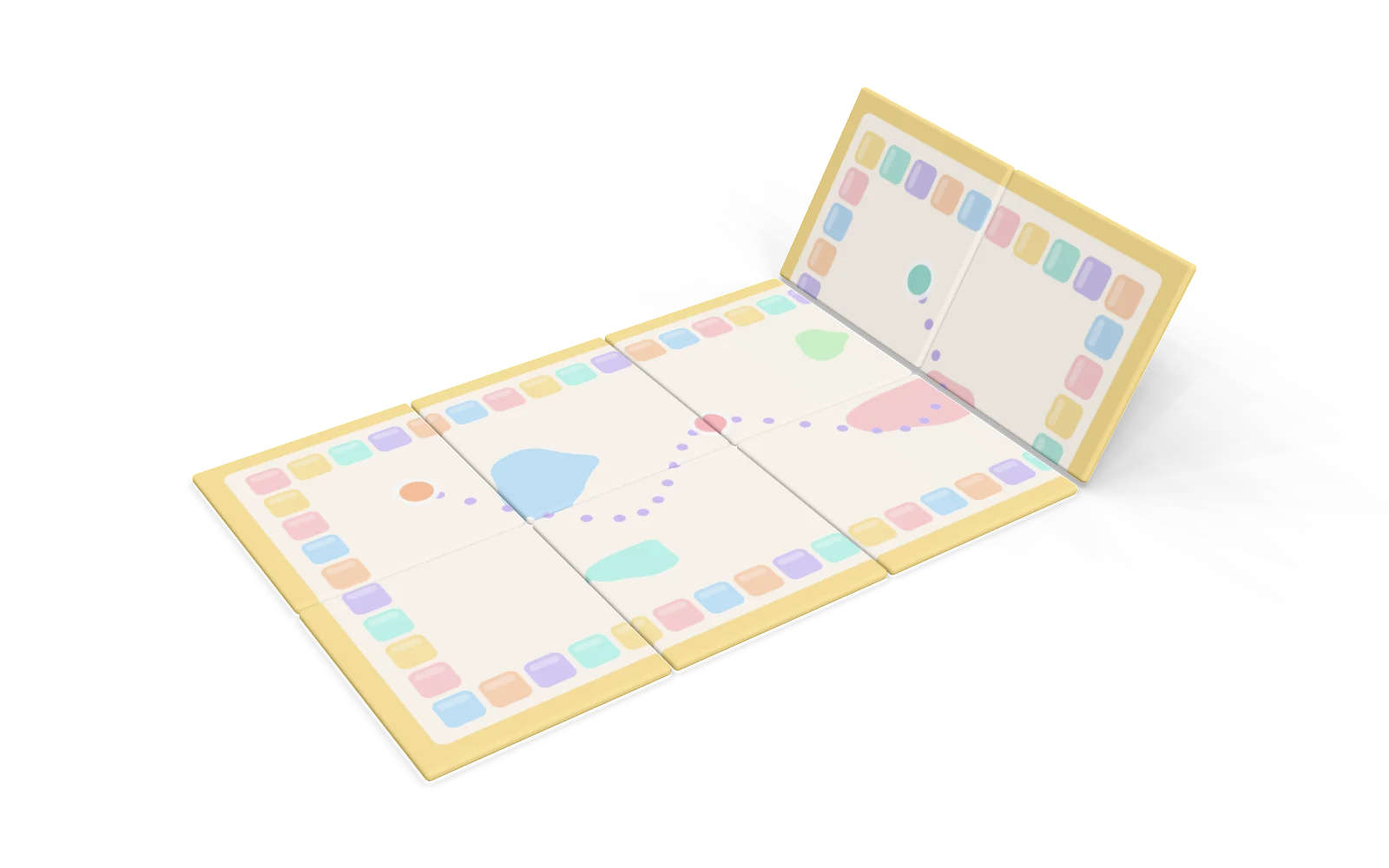
Six-Fold Game Board
A six-fold board has six panels, three by two. Many Euro and indie games use one because it opens into a large play area and folds into a small box. The panels have to be cut and aligned precisely.
Eight-Fold Game Board
An eight-fold board has eight panels, four by two, for the largest play areas in the most compact boxes. It adds the most fold lines to the play surface, so plan the artwork around them.
Working Out the Folded Size
To find the folded size, divide the unfolded size by the number of panels along each side. A 380 × 430 mm board folds to 190 × 215 mm as a quad-fold, or to 190 × 143 mm as a six-fold (two panels across, three along).
Foldable Game Board Sizes
A game board is printed on one sheet of paper, so the most cost-effective sizes are the ones that fill one of our standard printing sheets with little waste. Changing the size or shape of a board costs nothing extra as long as it fits one of these sheets; a size that leaves much of a sheet empty can cost as much as a larger board. Remember to add a 30 mm bleed to your artwork for the paper that wraps around the edge.
| Printing sheet | Sheet size | Board size (unfolded) | In inches |
|---|---|---|---|
| Four Opening Small | 370 × 530 mm | 360 × 390 mm | 14.2 × 15.4 in |
| Four Opening Large | 420 × 580 mm | 380 × 430 mm | 15.0 × 16.9 in |
| Four Opening Large | 420 × 580 mm | 390 × 540 mm | 15.4 × 21.3 in |
| Two Opening Small | 540 × 750 mm | 430 × 580 mm | 16.9 × 22.8 in |
| Two Opening Small | 540 × 750 mm | 480 × 730 mm | 18.9 × 28.7 in |
| Two Opening Large | 570 × 870 mm | 530 × 770 mm | 20.9 × 30.3 in |
| Two Opening Large | 570 × 870 mm | 540 × 840 mm | 21.3 × 33.1 in |
| Two Opening Large | 570 × 870 mm | 560 × 860 mm (largest recommended) | 22.0 × 33.9 in |
A square 508 × 508 mm (20 × 20 in) board is also popular, but it wastes much of its sheet, so we recommend it only from 2,000 sets. If your sheet has room for two boards, printing them together saves on the printing. With an open edge, the two boards are also cut together, which saves a significant share of the cost. With a wrapped edge, the saving is on the printing only: the special gluing that wraps the edge is priced per board, not per sheet. Our guide to how much it costs to make a board game explains how sheet sizes drive the price.
Large Game Boards
We recommend keeping a foldable board within 560 × 860 mm (22.0 × 33.9 in), especially for smaller print runs. Above 2,000 units, a board can go up to 640 × 860 mm (25.2 × 33.9 in). Beyond 860 mm the board becomes hard to glue by machine, so it moves to manual gluing at a higher price. For a bigger play area, a board can be made in sections joined with a jigsaw cut.
What Are Game Boards Made Of?
Game board material is layered: a printed paper sheet glued over a rigid cardboard core, with a backing paper on the reverse. Our standard construction is 157 gsm printed paper over 2 mm high-density cardboard, with black linen paper on the back.
Cardboard Thickness
The core is cardboard, usually grey chipboard (greyboard). We recommend a minimum of 1.5 mm and up to 2.5 mm, with 2 mm high-density board as our standard. Some creators go for 3 mm for extra weight, but a thicker board has a higher risk of tearing at the folds.
Density matters as much as thickness. High-density cardboard keeps the board from bending out of shape and from cracking at the seams, where every opening and closing puts weight on the fold. For extra strength at the folds, the core can be high-density white board.
The Printed Paper
The artwork is printed on 157 gsm paper. Heavier 250 gsm paper, which works well for tokens and tiles, is too stiff for a game board: it stops the board from folding completely flat and can pull away where the panels meet.
The back is usually covered in black linen paper. If you want artwork or a second game mode on the reverse, the back is printed too, and the black linen paper is left out. Hero Time uses FSC-certified paper and cardboard, as described in our eco-friendly production standards.
Finishes and Lamination
Lamination is the most important finish on a foldable game board. A thin plastic film over the printed paper protects the artwork from moisture, scuffs and wear through every opening and closing. It is our default finish for game boards, and it comes in several types:
- Matte lamination: a smooth, non-glossy surface that reduces glare, so detailed boards stay easy to read; a common choice for detail-heavy hobby games.
- Glossy lamination: a high-shine surface that makes colours vivid, often chosen for mass-market games.
- Dry-erase lamination: a film that players can write on with dry-erase markers and wipe clean.
- Anti-scratch lamination: recommended for dark boards, where scratches show easily.
A linen finish can be added on top for a textured, classic feel.
Double Lamination
Lamination film has threads that run along its length, so a single layer is strongest in one direction. Double lamination adds a second layer laid in the other direction, so the film reinforces the paper both ways, which matters on boards that fold in both directions, such as quad-fold, six-fold and eight-fold boards.
Why Oil Varnish Isn’t Enough
Regular oil varnish, the coating used on tokens and player boards, will not work on a foldable game board, unless the board uses a covered fold and 1 mm or 1.5 mm cardboard. For a standard board, use lamination.
How Foldable Game Board Folds Are Made
Covered Fold vs Clean Cut
There are two ways to make a fold. In a covered fold (also called a reinforced fold), paper runs over the fold on both sides of the board, so the hinge is very well protected and the board will not tear however much players handle it. The trade-off is a visible seam: the fold sits slightly lower than the panels around it, as on a Scrabble board.
In a clean cut, the front of the board is cut through at the fold and the panels are held together by the paper on the back alone. The seam is barely visible, so the artwork reads as one surface, but with heavy handling the hinge can slowly tear over time. This video shows both side by side:
Cut Depth: 90% of the Board
Each fold line is cut through about 90% of the board’s total thickness, a partial-depth cut that leaves the paper on the back as the hinge. A 2 mm board with 157 gsm paper is about 2.11 mm thick, so the fold is cut about 1.9 mm deep.
The Gutter (Covered Folds Only)
On a covered fold, a small gap between the panels, called the gutter, lets the paper flex at the fold instead of tearing. Leave room for it in your layout, and your manufacturer will check it before printing. A clean cut has no gutter.
Tape on the Fold Lines
Fold lines can be reinforced with a thin fabric-type tape, about 0.03 mm thick. It strengthens the hinge, but it causes some issues with the fold and adds a lot of manual labour, at about $0.30 a board. Double lamination or a high-density white board core are better ways to make the folds last.
Wrapped Edge vs Open Edge
On a wrapped edge, the paper folds over the edges of the board during gluing. It gives a clean, finished look and stops the edges from fraying. You choose which way it wraps: the artwork can wrap around to the back, so the art shows on the outside of the folded board, or the black back paper can wrap onto the front as a border. A wrapped edge adds about $0.15 a board, so it is the best choice when your game has one board.
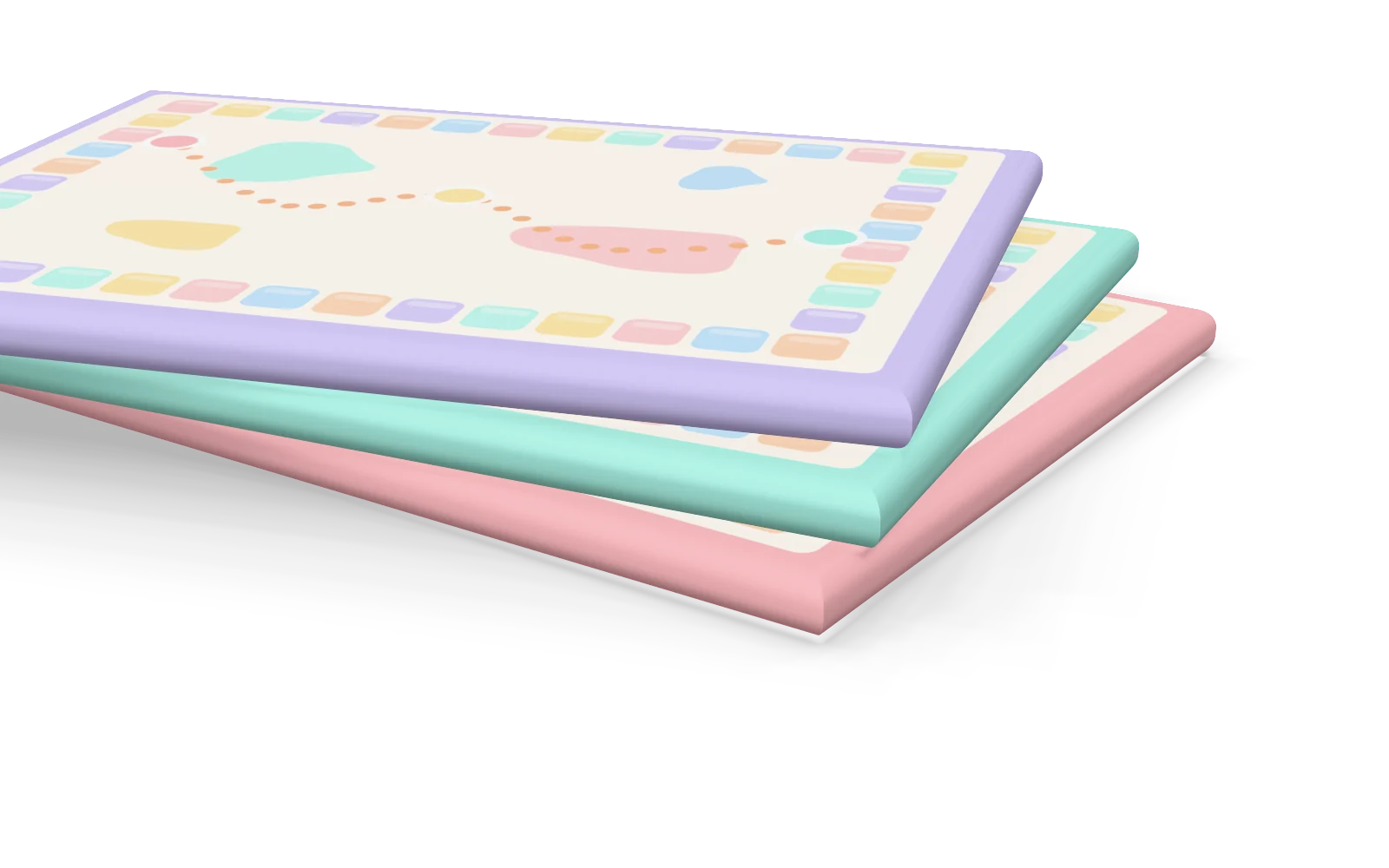
On an open edge, the printed paper (with its bleed) is glued on first and then the paper and cardboard are cut together, so the print runs right to the edge with no gap and the cardboard core shows on the side. It costs less, which makes it the better value when a game has several boards.
Jigsaw Cutting for Large Boards
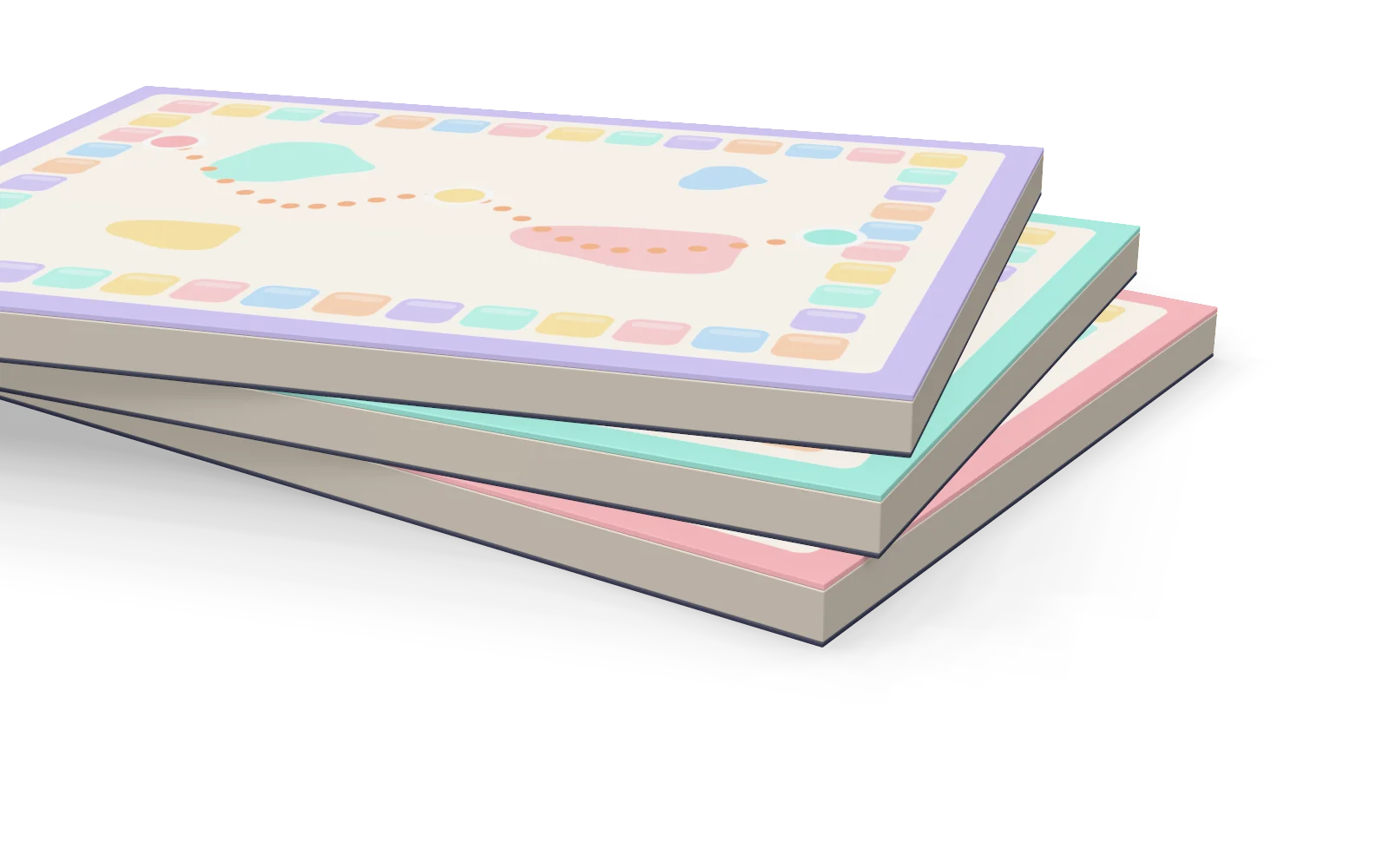
For a play area bigger than one printing sheet, the board can be made in two or more sections joined with a jigsaw cut instead of a fold (a jigsaw connection). Each section is printed on its own sheet, so the board is no longer limited to the size of one sheet, and it uses the same process as large map tiles, which can lower the cost. It works best when the colours are easy to match across sections and the gameplay doesn’t depend on perfect alignment between them. A jigsaw-joined board has no wrapped edge. From 2,000 sets, custom paper up to 740 × 960 mm is possible.
Plan the Board Before the Box
The board decides the size of the box, not the other way round. Settle the play area your game needs, choose the fold pattern, then size the box around the folded board: about 20 mm larger than the folded board, so players can lift it out without forcing it. If you are limited by box size, add folds rather than shrinking the board: a six-fold or eight-fold board keeps the same play area in a smaller box. Our guide to board game boxes covers the box itself.
Plan the folds before you lay out the artwork:
- Keep text, icons and key spaces off the fold lines, which wear first.
- Use natural breaks in the art, such as roads, rivers or borders, near the folds to hide the crease.
- Avoid high-contrast lines exactly on a fold, where any misalignment shows.
- Add the 30 mm bleed for the wrapped edge.
Making a Game Board Last
Tearing at the folds. The fold lines take the most wear. A covered fold protects the hinge best, while on a clean cut the hinge can slowly tear with heavy handling. To make any fold stronger, use double lamination, which reinforces the paper in both directions, or a high-density white board core, and keep the board within 1.5–2.5 mm. Fabric tape on the fold lines also works, at about $0.30 a board, but it adds manual work and can affect the fold, so double lamination or a white board core is the better choice.
Warping. A board warps when one side absorbs more moisture than the other and bends or twists. Covering both sides, the printed paper on the front and the backing paper on the back, gives the board a balanced structure that resists humidity.
Peeling. Peeling usually starts at the corners or along the fold lines. Good adhesive, the right wrap direction and, on a covered fold, a correct gutter prevent it: small production details a good manufacturer handles for you.
Storage and care. A box about 20 mm larger than the folded board lets players take the board out without bending it; a box that is too tight makes the board hard to remove and easy to damage. Tell players to store the game flat, away from moisture and direct sunlight, and add a short care note to your rulebook.
Prototyping a Foldable Game Board
Start with a simple mock-up at home: cut panels to your board’s dimensions and hinge them with masking tape to see how the board folds, where the panels overlap and how it sits in the box. If you want to know how to make a foldable game board at home, start with a basic quad-fold board before formal prototyping.
A professional prototype then lets you check the real size, the panel layout and the box fit. Expect a prototype board to fold less well than the production board, with some risk of tearing at the folds: use it to judge the size, layout and fold pattern, not the final hinge. Fixing a misaligned panel or a wrong size at the prototype stage costs far less than after mass production starts.
Ready to make your board? We manufacture foldable game boards from bi-fold to eight-fold as part of our board game manufacturing, and we can help you choose the size, cardboard, finish and fold for your game. Contact us for advice or a quote.
Frequently Asked Questions
What is a foldable game board?
What is the difference between a game board and a player board?
What are game boards made of?
How thick should a foldable game board be?
How do you stop a foldable game board from tearing at the folds?
How deep is the cut on a game board's fold line?
What sizes do foldable game boards come in?
Talk to Our Team About Creating Your Board Game
From design to manufacturing, we can help you with every aspect of turning your game concept into reality.