
How to Publish a Board Game: Your Routes
 By Hersh Glueck
There are two ways to publish a board game: publish it yourself, or pitch it to a board game publisher. One of the most frequent questions game creators ask is which of the two to choose.
All those months of planning and checking every detail have come to fruition, and your game is ready to sell. Selling to players is the final step of publishing a board game, so this guide is also about how to sell a board game: through your own channels, or through a publisher or distributor.
Self-publishing makes you a little fish in a big pond. Many publishers have been making games for years, which gives them customer loyalty, credibility and a large marketing budget. A new self-publisher has none of these, so it is harder to get noticed.
For many first-time creators, choosing between self-publishing and a publisher is hard. Each route has pros and cons. Here we look at what to think about before you decide.
Check Out Our Free Resource: Checklist for Making a Game
This comprehensive checklist guides board game designers from concept to production.
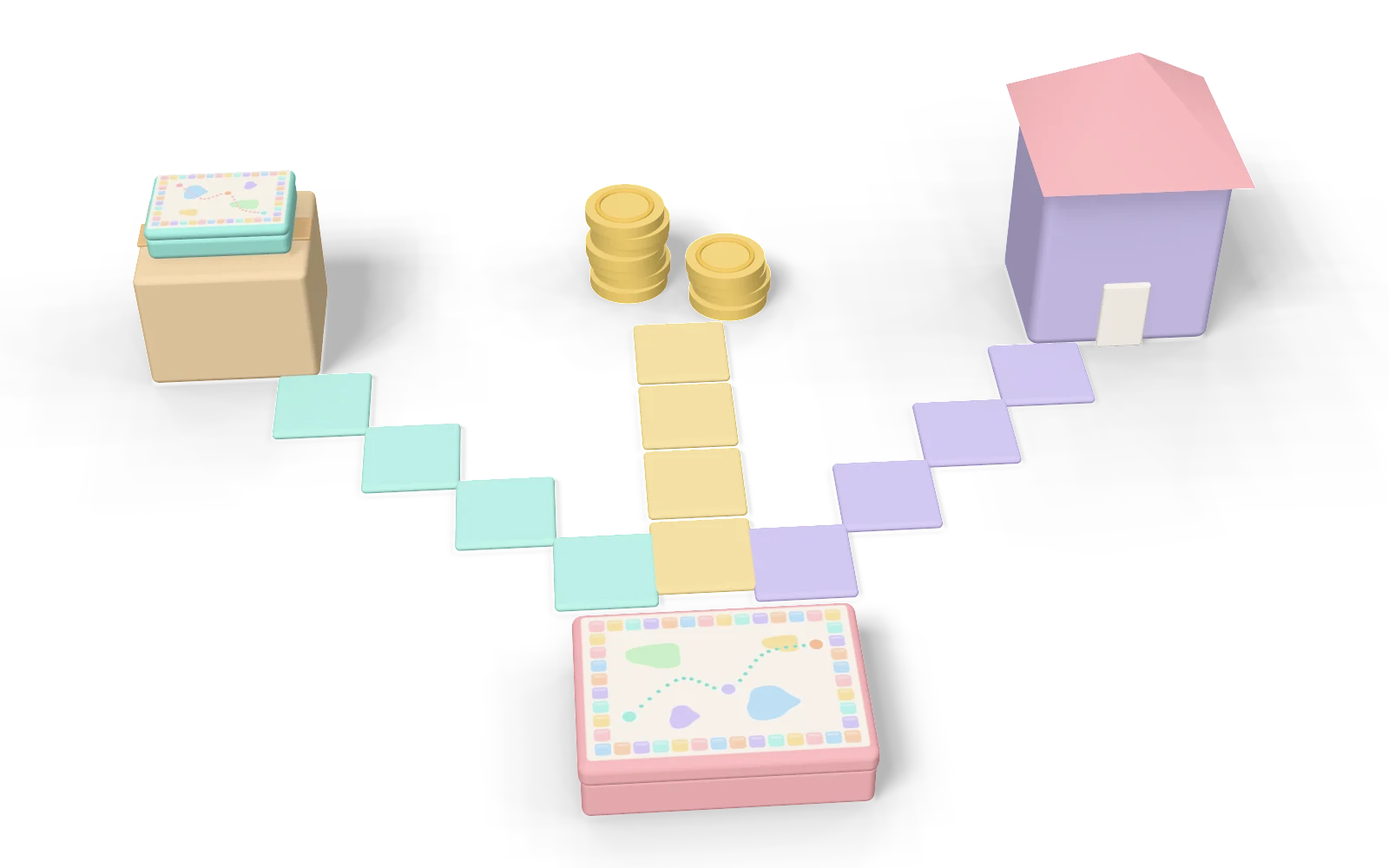
Self-Publishing vs a Publisher vs a Distributor
Self-publishing keeps the profit and the control with you. A publisher brings an audience and know-how in return for a share, and a distributor sells your stock to shops at a large discount. Here is how the three compare.
| Self-publishing | A game publisher | A distributor | |
|---|---|---|---|
| Who pays for the print run | You | The publisher | You |
| Who owns the game | You | Usually the publisher (licence or sale) | You |
| How you earn | The full price, minus your costs | A royalty per game, or an upfront payment | About 30% to 40% of the retail price per game they buy |
| Who sells it | You: crowdfunding, your website, Amazon | The publisher, through its network | The distributor, to shops in its region |
| Pros | All profits go to you More creative control You control the quality | A larger customer base Upfront or royalty payments Industry knowledge | Reach into shops and new countries Bulk orders You keep the IP |
| Cons | Few players know your name You may lack market knowledge No guaranteed profit | Less money in your pocket Highly selective Less creative influence | Sells at 60% to 70% off the retail price You must prove the game sells first |
| Best for | Creators confident in their game and its market | Creators with many games in development | Games that are already selling |
How to Self Publish a Board Game
If you choose to self-publish, the next question is how to self publish a board game. There are four main channels, and most self-publishers combine two or more:
Crowdfunding
Crowdfunding is a popular way to start your board game journey. On sites such as Kickstarter, Gamefound, Indiegogo and Verkami, a creator pitches the game idea and collects money from backers before the game is made. This eases the stress of paying for manufacturing and gives you more freedom to focus on the game's quality. Our guide to board game crowdfunding sites compares them.
Crowdfunding has two downsides. The first is the cost of building the campaign. A successful Kickstarter campaign can cost more than USD 10,000 to launch. You need a video, the art for your page, three to five samples for reviewers, a page that converts, and a few months of social media ads to grow your following. Even if you do all of this, the campaign might not raise enough money.
Second, the people who follow your crowdfunding page are not your data. You cannot see exactly who visits the page, which makes it hard to target specific markets. Still, among game creators, Kickstarter is a proven place to gain credibility and traction. About 15% of the people who follow a campaign page go on to back it, and if other designers and fans back your project, your game is on the right track.
Your Own Game Website
You can also build your own website. Tools such as WordPress or Shopify make this easier, and they give your game a direct channel to customers and investors.
A website casts a wider marketing net. You can link it to social media such as Facebook, Instagram, TikTok and Reddit, and to online shops such as Amazon. Once the game is finished, it is all about marketing it well enough to make all that work worthwhile.
A website also lets you offer newsletters, subscriptions and blog posts. These help you track visitors and collect customer data. With analytics, you can see the age, location and interests of your visitors. That makes your advertising more targeted, which brings more sales.
Selling on Amazon
Amazon is a popular place to sell, but its costs add up: warehousing, shipping, commission and advertising. Research every selling option first, so your marketing budget is used well. Our guide on how to sell your board game on Amazon covers the details.
Amazon charges a 15% commission on each sale, plus shipping and warehousing fees. That is normal and manageable for most game makers. The real concern is advertising.
Amazon is one of the most dominant online retailers in the world, so you will have many competitors. Like Google Ads or Facebook Ads, Amazon lets you pay to show your product to the right customers. Without ads, your game can get lost among searches for "best board game" or "fun games". Ad costs can eat your profit, so set a firm budget before you sell on Amazon.
If your game ranks high in Amazon's search, it can sell very well. A Hero Time client made Gift Grab Game for Christmas and gift giving. Amazon recognised it as a niche top performer and ranked it first for "gift exchange games". Customer reviews matter too, because word of mouth is one of the cheapest and most effective forms of advertising.
Gift Grab Game sold out all 1,000 units before the end of October. Imagine if the client had expected that response and made 10,000 units or more. It shows that if you research your keywords and tags and place your game in the right category, you can do very well on Amazon.
Product awareness matters on Amazon as well. Your own website and social media reach a large audience and build a buzz about your game. But many buyers will still choose to buy on Amazon, because it feels more secure than a little-known website. So plan where your game sits in the online market, and use every channel that can bring sales.
Board Game Distributors
Many self-publishers also reach out to board game distributors. A distributor sells your game to shops, online or through all the stores in its network. For example, a creator in Argentina can sell in Spain without setting up there. Our guide to board game distributors explains how to find one and which deal to choose.
Working with Board Game Publishers
Board game publishers are already established in the market, so they reach a larger customer base. Your game is seen by many more buyers, which can greatly increase sales. You may also receive royalties for each game sold, and some publishers pay upfront.
In return, the publisher takes a share of every sale, so less money ends up in your pocket. If your game sells well, this may not matter. If it sells few copies, it can lower your profit and your confidence.
Publishers are also highly selective. You would not recommend a bad restaurant to your friends, and publishers will not put a weak game in their line-up. This also means a publisher can influence your creative process and change your original idea.
A publisher and a creator sign a contract so both sides are happy. But the publisher has the upper hand, because it receives hundreds, if not thousands, of submissions a year. So be flexible if your game is chosen.
How to Pitch a Board Game to a Publisher
To pitch a board game to a publisher, show them quickly that your game is fun, fits their catalogue and can sell. Most publishers ask for the same few things:
- Research the publisher. Play their games and pitch only to publishers whose catalogue fits your game. Many board game publishers accepting submissions list their rules on a submissions page.
- Send a sell sheet. One page with the game's hook, player count, play time, age and components. Our guide to board game sell sheets shows how to make one.
- Add a short gameplay video and the rules. A two-minute video often decides whether they ask for more.
- Have a prototype ready. If they are interested, they will want to play it.
- Follow up politely. Publishers are busy; a short follow-up after a few weeks is normal.
Which Route Should You Choose?
If you have the skills, dedication and confidence in your game and its market, Hero Time recommends self-publishing your board game. After all those months of turning your dream game into reality, why should someone else benefit from your work?
If you have many games in development, a publisher might be the better route. They might pick one of your games and give your name more exposure and credibility. Do not get discouraged: publishers are not all the same. Some have a strict selection process, while others are more flexible with creators.
When your game is ready to make, our board game manufacturing team can quote it within 48 hours.
Frequently Asked Questions
How do I publish a board game?
Is it better to self-publish or use a publisher?
How do I pitch a board game to a publisher?
How much does it cost to publish a board game?
Talk to Our Team About Creating Your Board Game
From design to manufacturing, we can help you with every aspect of turning your game concept into reality.