
Who is this for?
This guide is for game creators and small publishers ready to scale by partnering with major distributors like Big Potato in the UK or Asmodee North America. If distributors are interested in your game, you must choose the right cooperation model to protect your intellectual property (IP) and ensure sustainable profits.
Why Does the Distribution Model Matter?
Choosing the wrong model can cost you creative control, revenue transparency, and even your IP rights. Distributors have strong networks, but your leverage is your game. Before signing anything, understand the three main cooperation models and their implications.
Three Cooperation Models Explained
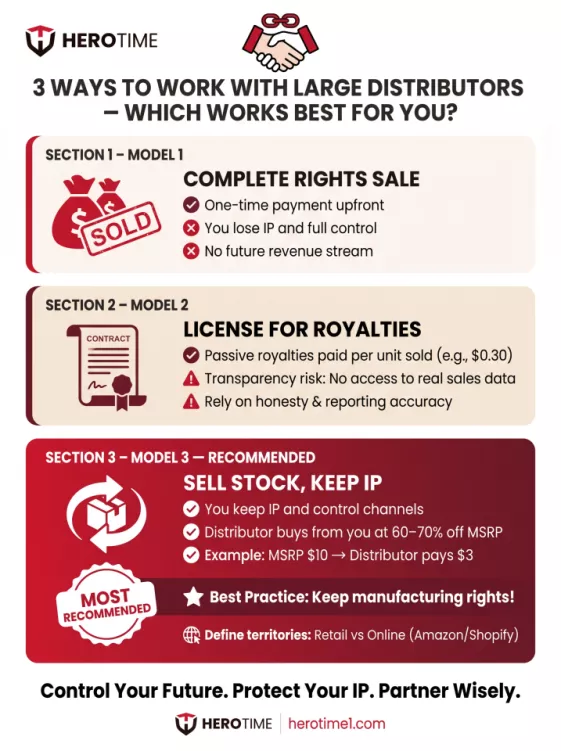
Model 1: Full Sale of Game Rights
- What happens?
You sell the game rights outright for a lump sum.
- Implications:
-
- They own everything — IP, sales channels, production.
-
- You lose all control and future royalties.
- Who is this for?
Designers who want a clean exit and no future involvement.
Model 2: Licensing Your IP
- How it works:
You license your IP and game to the distributor for a royalty (e.g., $0.30 per game sold).
- Pros:
-
- Low upfront work.
-
- Passive income stream.
- Cons:
-
- You rely fully on their reporting.
-
- No transparency on actual sales data.
-
- Financial mistakes or discrepancies can happen.
- Tip:
Always try to keep the manufacturing under you, so you have full access to the exact number of games the distributors / publishers produced. (If you cannot Always include audit rights in the contract if you choose this route. )
Model 3: Discounted Sales While Keeping IP Ownership (Recommended)
- How it works:
You sell your game stock to the distributor at 60–70% off MSRP.
-
- Example: MSRP = $10, Distributor Price = $3.
- Why this is best:
-
- You keep IP ownership.
-
- You decide which markets and channels they cover.
-
- You control manufacturing and quality.
- Example:
-
- Distributor handles North American retail.
-
- You keep Amazon and Shopify for direct sales.
- Best practice:
Always keep manufacturing rights. This ensures:
-
- Accurate production tracking.
-
- Control over quality and timelines.
-
- Prevention of backdoor deals with retailers.
Key Decision Factors
| Factor | Model 1 | Model 2 | Model 3 |
| Retain IP Ownership | No | Yes | Yes |
| Long-term Revenue | No | Yes | Yes |
| Transparency | High | Low | High |
| Control over Channels | No | No | Yes |
| Complexity | Low | Medium | Medium |
Best Practices for Any Model
- Negotiate clear channel rights (e.g., online vs retail).
- Keep IP ownership whenever possible.
- Control manufacturing to maintain leverage and verify numbers.
- Work only with trusted board game manufacturers who won’t bypass you.
- Put everything in writing — avoid verbal agreements.
Real-World Use Case
Imagine your game is gaining traction, and Asmodee approaches you. You choose Model 3:
- They distribute in retail stores across North America.
- You keep Amazon sales and direct-to-consumer.
- Every time they need stock, they buy from you at $3 per unit.
- You own IP, keep brand control, and still leverage their retail power.
This hybrid approach offers scalability without losing control.
FAQ
Q: Why is Model 3 considered the best for most creators?
Because you keep your IP, control channels, and maintain financial transparency.
Q: What if a distributor insists on manufacturing themselves?
Negotiate access to reports and enforce strict audit clauses. If possible, avoid giving up manufacturing rights.
Q: Can I work with multiple distributors?
Yes, as long as you define exclusive and non-exclusive territories in the contract.
