
Gamefound vs Kickstarter for Board Games
 By Hersh Glueck
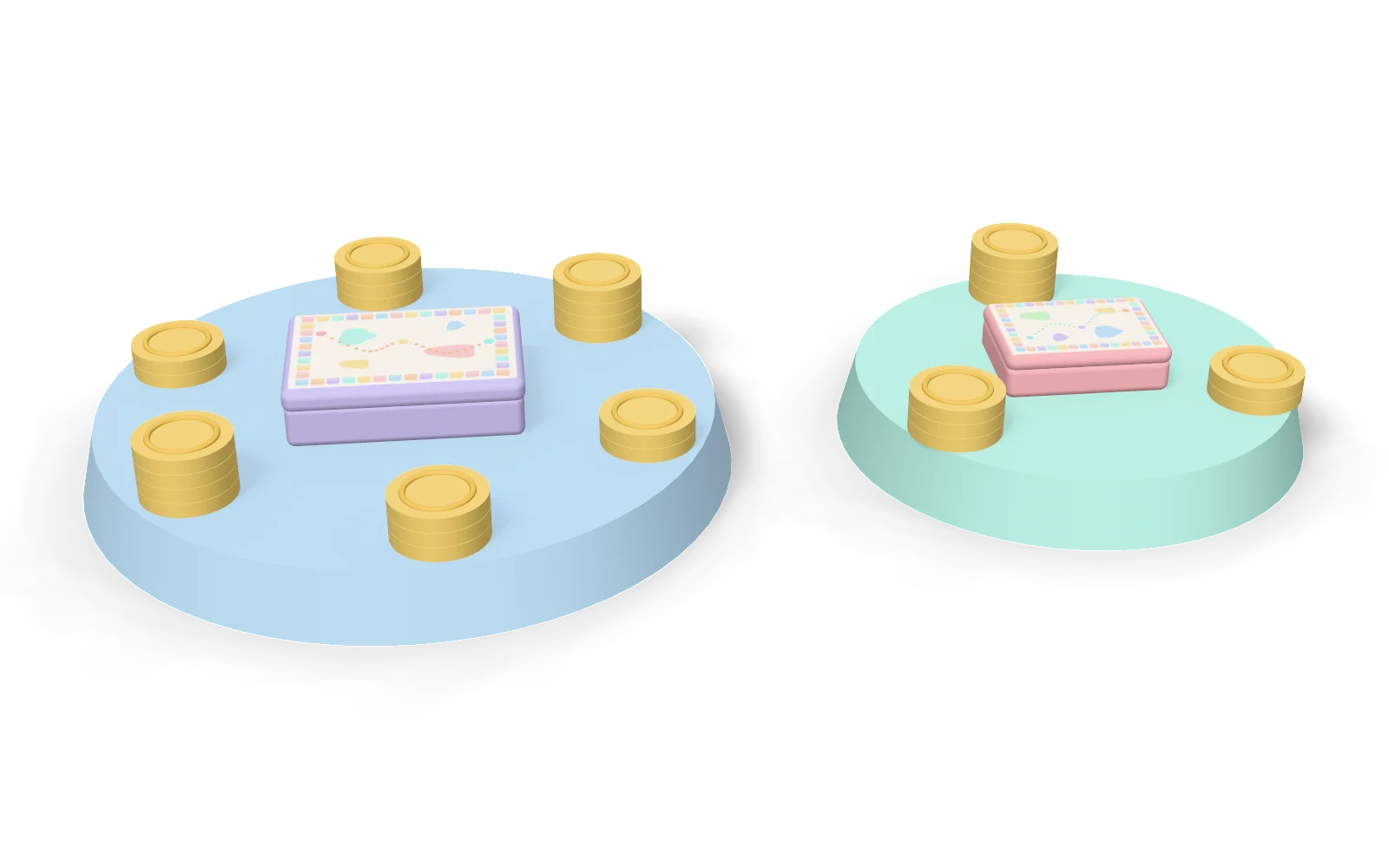
Gamefound vs Kickstarter comes down to size versus focus. Kickstarter is far bigger and reaches every kind of backer. Gamefound is smaller, but everyone on it is there for tabletop games. Fees are almost the same. There is no single best platform: it depends on who your game is for.
Crowdfunding lets you collect money from your future players before the game is made. It speeds up development, makes games possible that traditional funding would not, and shows you how much interest there is before you print. Kickstarter and Gamefound are the two biggest crowdfunding sites for board games and card games. This guide compares their history, audience, fees, tools and results, so you can choose.
Key Takeaways
- Kickstarter is much bigger than Gamefound. From the figures available, Kickstarter's audience is more than 20 times Gamefound's.
- Kickstarter's audience is general; Gamefound's is specialised. People visit Kickstarter for every kind of product. Gamefound only hosts tabletop games. Think size versus focus.
- Gamefound suits hardcore games. Its audience is smaller but full of passionate tabletop fans who back unusual projects.
- Gamefound still produces huge campaigns. It has hosted several projects that raised more than USD 5 million. You don't need Kickstarter's size to succeed.
- Both are easy to use. Gamefound also sells marketing services, but you may not need them if you already have a good plan.
- Fees are almost the same. Both charge 5%, plus about 3% payment processing and small fees per pledge.
- There is no best platform for every project. For mass-appeal games, Kickstarter's size helps. For niche games that enthusiasts love, Gamefound is worth considering.
Gamefound vs Kickstarter at a Glance
| Kickstarter | Gamefound | |
|---|---|---|
| Built for | All creative projects; tabletop is one of its biggest categories | Tabletop games only |
| Audience | The largest: more than 20 million backers; in 2024, 6,646 tabletop campaigns launched | Smaller but focused: passed 1 million users in 2023; also reaches Indiegogo visitors since 2025 |
| Platform fee | 5% of funds raised, only if funded | 5% of funds raised, only if funded |
| Payment processing | About 3% + USD 0.20 per pledge (US) | About 3% + a 0.2% transaction fee |
| Funding model | All-or-nothing | All-or-nothing |
| Pledge manager | Basic tools; most creators add one such as BackerKit | Built in: add-ons, late pledges and shipping in one place |
| Marketing help | None from the platform | Paid ad services (10% of ad spend), newsletter and featured spots |
| Best for | Games with broad, mass appeal | Games for dedicated hobby gamers |
What Is Gamefound?
Gamefound is a crowdfunding site only for tabletop games: board games, card games and role-playing games. It started in 2018 as a pledge manager for Kickstarter projects. That gave it a deep understanding of what tabletop creators and backers need. In 2020 it became a full crowdfunding platform.
In July 2025, Gamefound bought Indiegogo, one of the oldest crowdfunding sites. The two still run as separate sites, but a Gamefound campaign can now also be found by Indiegogo's visitors.
Is Gamefound Legit?
Yes. Gamefound is an established crowdfunding platform used by large tabletop publishers such as Awaken Realms, and it is big enough to have bought Indiegogo in 2025. As on any crowdfunding site, the risk lies with each campaign, not the platform: before you back a project, check the creator's track record and whether they have delivered games before.
How Much Money Has Gamefound Raised?
Gamefound does not publish an all-time total, but its biggest campaigns show its scale. Nemesis: Retaliation raised more than USD 12 million there, and ISS Vanguard more than USD 11 million. Indiegogo, now owned by Gamefound, has raised nearly USD 3 billion since it started.
Kickstarter History and Overview
Kickstarter is the largest crowdfunding network for games, including tabletop games. Founded in 2009, it became so linked with crowdfunding that "Kickstarting" a game is like "Googling" a question.
Its mission is to bring creative projects to life. It covers everything from art to technology, and tabletop games are one of its most popular and successful categories.
Kickstarter uses all-or-nothing funding: a project must reach its goal within a set time to receive any money. This encourages realistic goals and active promotion, and gives backers confidence that money is only collected when a project has enough support.
Audience and Reach
Kickstarter Audience and Reach
Kickstarter's audience is huge and global, with more than 20 million backers. Not all of them are there for games, but many are: tabletop is one of its top categories. In 2024, 6,646 tabletop campaigns launched on Kickstarter and 80% of them were funded, raising about USD 220 million. Many backers support several projects: in 2024, about 35% of users were repeat backers.
Gamefound Audience and Reach
Gamefound is newer and much smaller. It passed one million users in 2023, so its total audience is less than 5% of Kickstarter's. But instead of a general audience, Gamefound's users are all tabletop gaming fans, and since 2025 its campaigns also reach Indiegogo's visitors.
Gamefound Fees vs Kickstarter Fees
Kickstarter and Gamefound both charge a 5% fee, and only on successful projects. If your campaign does not reach its goal, neither charges the platform fee.
Kickstarter fees: payment processing depends on your location. In the US it is 3% of the total, plus USD 0.20 per pledge. Pledges under USD 10 pay USD 0.05 each, but 5% processing. Kickstarter lists the fees for other countries on its fee page.
Gamefound fees: 3% payment processing plus a 0.2% transaction fee, in your project's currency.
In practice, the fees are almost the same, so they should not decide your choice.
Project Support and Tools
Both platforms work in a similar way. Kickstarter has an easy page builder for videos, images and descriptions, and good real-time analytics: pledge amounts, backer counts and traffic sources. You can post updates and talk to backers in the comments.
Gamefound offers similar tools, improved by its pledge manager roots. It gives you more control over how your project page looks, and its pledge management is built in, so you manage add-ons and shipping in the same place, during and after the campaign.
Gamefound also sells marketing services. Its in-house team can run Facebook and Google ads for your campaign, and its partnership with BoardGameGeek can put your project in front of that large audience. These services cost 10% of your advertising budget. Gamefound does not guarantee results: you pay on your ad spend, not on backers won.
Gamefound also partners with influencers and offers free placements on its own site (the top section, featured projects and the newsletter) as part of its Crowdfunding + Pledge Manager package. Its newsletter reaches more than 100,000 subscribers every month.
Overall, both offer good crowdfunding tools. Gamefound adds a wider range of marketing services, while Kickstarter offers a less specialised platform with the largest audience.
Success Rates and Case Studies
Kickstarter has a long record of successful game projects. Tabletop games fund far more often than the platform average: 80% of tabletop campaigns were funded in 2024.
Notable Kickstarter success stories:
- Exploding Kittens (2015): one of Kickstarter's most successful games ever, it raised more than USD 8.7 million.
- Frosthaven (2020): the sequel to Gloomhaven raised almost USD 13 million.
- Altered TCG (2021): designed by Régis Bonnessée, it raised more than EUR 6 million.
- The 7th Continent (2017): the cooperative board game raised more than USD 7 million.
- The Witcher: Old World (2021): backed by the books, games and TV series, it raised EUR 6.8 million.
Gamefound does not publish its average success rate, but it has hosted many successful projects, small and large, since 2020.
Notable Gamefound success stories:
- Nemesis: Retaliation (2022): a standalone expansion for the survival horror game Nemesis, it raised more than USD 12 million.
- ISS Vanguard (2020): it raised more than USD 11 million.
- Dragon Eclipse (2022): another Awaken Realms project, it raised more than USD 4.8 million.
- Food Chain Magnate: Special Edition (2020): the heavy strategy game raised more than EUR 1.3 million.
- Andromeda's Edge (2022): the worker placement game from Cardboard Alchemy raised USD 1.6 million.
Which Platform Is Best for Board Games and Card Games?
There is no single best crowdfunding platform for board game and card game creators. Kickstarter vs Gamefound is a choice between a bigger, broader audience and a smaller, focused one. Both have good tools for building your page, talking to backers and promoting your game.
If your game appeals to a wide audience and you want to reach as many people as possible, Kickstarter is a strong choice. If your game appeals more to dedicated tabletop fans, Gamefound is well worth considering. To compare all seven main sites, including BackerKit and Indiegogo, read our guide to board game crowdfunding sites.
After the campaign, our guide to Kickstarter fulfillment explains how to get each game to its backer, and crowdfunding fundamentals covers building your audience before launch.
Frequently Asked Questions
Is Gamefound better than Kickstarter?
What is Gamefound?
Is Gamefound legit?
What are Gamefound fees compared with Kickstarter fees?
Talk to Our Team About Creating Your Board Game
From design to manufacturing, we can help you with every aspect of turning your game concept into reality.