
Board Game Sell Sheet Template & Guide
 By Hersh Glueck
A board game sell sheet is a one-page pitch for your game: an ad, a résumé and a summary in one. You send it to publishers, distributors and shops so they can see in a minute what your game is, who it is for and why it will sell. This guide explains what to put on one, gives you a sell sheet template, and shows real board game sell sheet examples.
You've designed your game, made a prototype and playtested it until it's as much fun as you imagined. Congratulations: these are major milestones, and it takes a lot of work to get here. Once you know the game is fun, you will start thinking about reaching out to publishers. That is where the sell sheet comes in.
If you have read about the board game publishing process, you have probably seen the term "sell sheet" already. Making one can seem intimidating, but it is actually simple.
What Is a Board Game Sell Sheet?
What is a sell sheet? It is a one-page advertisement for your game. You know your game well, but publishers and players don't, and their time is limited. A sell sheet grabs their attention and gives them all the key information at a glance.
Think of it as your game's résumé, or a trailer for your game on paper. It shows what is unique and interesting about your game, how it plays, and why it deserves attention. A good sell sheet includes:
- Your game's name
- A brief description of the game
- The basics of its mechanics
- The number of players
- The playing time
- The target age range
- Its unique selling points (USPs)
It should not try to say everything. As Angus Walker of Hasbro puts it, anything that helps to "distill a concept into an easy to grasp set of key benefits" is a good thing. Keep it simple, direct and close to your game's core concept and mechanics.
Why You Need a Sell Sheet for Your Game
- First impressions count. Your sell sheet is usually the first thing a publisher sees of your game. A professional sheet that shows what makes your game special helps you stand out.
- Publishers are very busy. They have little time and many pitches to judge. A sell sheet shows your game's potential quickly, which makes your pitch easier to say yes to.
- Sell sheets are great marketing tools. Beyond publishers, you can use one with shops, distributors and players: in press kits, at conventions and on social media.
- Making one changes how you see your game. It forces you to boil your game down to its most essential and appealing parts.
How to Make a Sell Sheet in Five Steps
A good sell sheet combines clear information with an engaging layout. Here is how to make one:
- Write your hook. One line that sells the fun, for example "Quack first, think later".
- Collect the facts. Players, play time, ages, genre, retail price (MSRP) and box size.
- Pick three or four selling points. What makes your game different: its theme, a mechanic, who it is for.
- Get one great image. A clear photo or render of the box and components.
- Lay it out on one page using the template below, then ask a few people for feedback and revise.
Board Game Sell Sheet Template
Use this board game sell sheet template as your starting layout. It has seven blocks, in the order a publisher reads them:
- Title and one-line hook: the game name, big, and the line that sells the fun.
- Hero image: a clear photo or render of the box and the pieces.
- Quick facts: players, play time, ages, genre, retail price (MSRP) and box size.
- How it plays: what players do on a turn and how they win, in two or three short sentences.
- Why players love it: three or four short reasons your game stands out (its unique selling points).
- What's in the box: the main components and how many of each.
- Contact, video and rules links: your name and email, a two-minute gameplay video and the rules.
Here is the same template filled in for a made-up card game:
Key Things to Include in Your Sell Sheet
Include all of the following, as long as you can do it without overwhelming the reader:
- Game title: make it prominent and memorable.
- Brief description: a sentence or two that captures the essence of your game.
- Gameplay mechanics: highlight what is unique or new about how it plays.
- Player information: number of players, playing time and age range.
- Components: the main components that come with your game.
- Unique selling points: what makes your game stand out, whether it is the theme, the mechanics or something else.
- Visuals: high-quality images of your game and its components.
- Contact information: make it easy for interested people to reach you.
Recommended Software for Board Game Sell Sheets
There is no software made just for sell sheets. Most tabletop creators use Adobe InDesign or Illustrator, which both make polished sell sheets and other game documents. Without Adobe, these low-cost or free tools work too:
- Canva: not the most powerful design tool, but more than good enough for a simple sell sheet.
- Microsoft PowerPoint: not rich in features, but fine for a simple sell sheet in a tool you probably already know.
- Scribus: a free, open-source alternative to InDesign.
You can also hire a designer while you keep working on the game. We work with Rob Ingle, a lead artist and designer with more than 15 years in the board game industry, for sell sheets, campaign pages and other marketing art. Contact us and we will connect you. See our guide to board game art for more on working with artists.
Graphic Design Tips for Sell Sheets
Good sell sheets are simple. Use images and design to show what your game is about, but keep the page uncluttered:
- Avoid visual clutter: too much text or too many illustrations overwhelm the reader. Use space wisely and focus on the essentials.
- Hierarchy: use font size, colour and placement to guide the eye to the most important parts.
- Consistency: match your game's visual style and theme, which builds your brand.
- Quality images: use high-quality, professional images. This may mean hiring a photographer or using your game's own illustrations.
Other Tips for a Successful Sell Sheet
- Feedback: before you finish, ask peers, mentors or players for feedback. Fresh eyes spot problems you miss.
- Revision: expect to revise the sheet as feedback comes in and as your game changes. Several versions are normal.
- Print quality: if you print sell sheets, use a professional printer and good paper. Print quality reflects on your game.
- Digital formats: keep a PDF for email and a JPG or PNG for social media.
Board Game Sell Sheet Examples
Two real board game sell sheet examples:
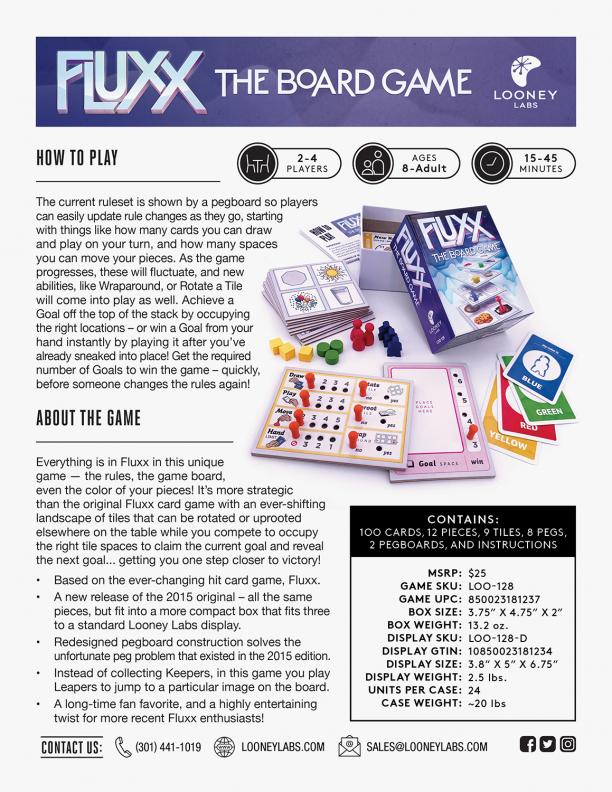
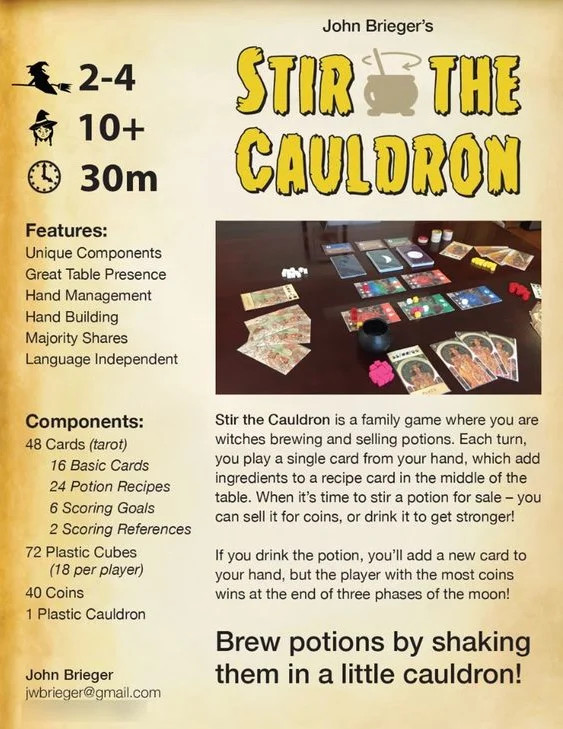
Next Step: Pitch Your Game
With your sell sheet ready, the next step is choosing who to send it to. Read how to publish a board game to compare publishers with self-publishing and learn how to pitch, and our guide to board game distributors if your game is already selling.
Frequently Asked Questions
What is a sell sheet for a board game?
What should a board game sell sheet include?
How long should a sell sheet be?
What software do I need to make a sell sheet?
Talk to Our Team About Creating Your Board Game
From design to manufacturing, we can help you with every aspect of turning your game concept into reality.