
Token Sheet Cost: What Sets the Price
 By Hersh Glueck
A token sheet costs about 0.30 to 0.60 USD per 200 × 270 mm sheet at typical print runs. That number moves with five things: how well your sheets fill the printing sheet, the cardboard thickness, the number of sheets in the game, the finish, and the quantity you order. The cutting die, which most guides tell you to worry about, is the cheapest part. This guide explains the token sheet cost line by line, with the real numbers, so you know where a saving is real and where it is not.
Check Out Our Free Resource: Guide For Selecting Components
This guide helps board game designers select ideal components and quantities.
If you want to know how a token sheet is made and what shapes are possible, read our guide to board game tokens first. This page is only about the money.
What You Pay For in a Token Sheet
A token sheet, also called a punchboard, is two printed papers glued to a cardboard core and stamped with a cutting die. The token sheet price covers each of those steps: the two 250 gsm printed papers, the high-density cardboard core, the gluing (semi-automatic, because the small cuts need precision), the oil varnish, two passes through the stamp cutter, and the die itself. Every one of those steps has a set-up, and the set-up is paid once per printing sheet layout, not per token. That is why the layout matters more than anything else on this page.
The Printing Sheet Sets the Price
The factory does not price a token sheet; it prices the 280 × 420 mm printing sheet it is cut from. Half a printing sheet costs about the same as a whole one, because the printing, gluing and cutting set-ups are the same. So the first question is how many of your token sheets come out of one printing sheet, with the 6 mm cutting margins included:
| Token sheet size | Per 280 × 420 mm printing sheet |
|---|---|
| 90 × 140 mm | 9 |
| 90 × 200 mm | 6 |
| 140 × 200 mm | 4 |
| 200 × 240 mm | 2 |
| 200 × 270 mm | 2 |
| 270 × 270 mm | 1 |
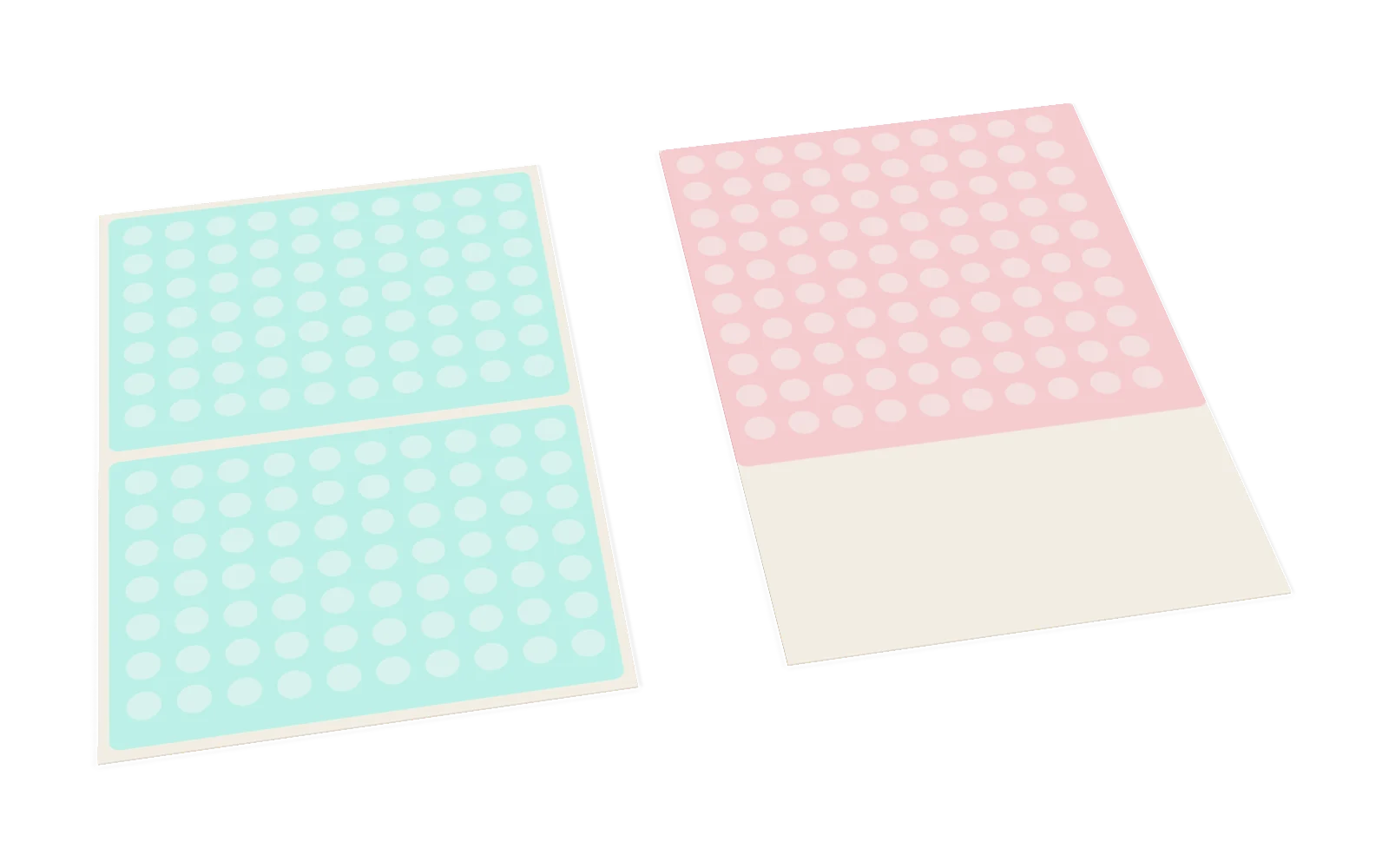
Now choose the number of sheets per game to match. With 140 × 200 mm sheets, 1, 2 or 4 sheets per game use whole printing sheets: four games per printing sheet, two games, or one game. Three sheets per game leaves a quarter of every printing sheet empty, and you pay for that quarter. The same logic applies to a popular but wasteful choice, the 280 × 280 mm square sheet: the paper can be cut to that size, but the printing and cutting machines are set up for 280 × 420 mm, so a third of their capacity does nothing. We once took two to three dollars off a token-heavy game just by changing its sheet size.
The Cutting Die Is Cheap
A simple cutting die costs about 200 RMB (30 USD) and a complex one up to about 400 RMB (55 USD). Spread over 2,000 games that is a cent or two per game, so simplifying your token shapes to save on the die does not pay. The sales team does not swap or simplify dies to lower a quote either. One thing about the die does matter: there is one die per printing sheet layout. If a game has 100 coins and 200 squares, we spread them across the sheets so that every sheet is identical and one die cuts them all. That is why the tokens on a punchboard always come mixed, and why you should tell your manufacturer when your sheets share one layout.
Thickness: 1, 1.5 or 2 mm
The cardboard core is bought by the ton, so a thicker core costs more and weighs more. 1 mm is the cheapest and feels thin. 1.5 mm is the standard and the right choice when tokens are not the heart of the game. 2 mm feels premium and suits games where the tokens are handled all game long, such as poker-style money. Thicker cardboard is also harder to cut, so tokens with fine detail and thin areas cost more at 2 mm than at 1.5 mm. Our guide to token sheet thickness explains what each thickness feels like; the cardboard costs article has the price per ton.
Finish
Oil varnish is included in the token sheet price and is the right finish: it protects the print and cuts cleanly. A linen texture adds about 0.10 USD per sheet. Lamination is avoided on token sheets, because the plastic film stretches in the cutter and raises the wastage, which raises your price.
Fewer Sheets
Every token sheet in the game is paper, cardboard, glue, two cuts and a share of the shipping weight. Three ways to need fewer sheets: combine rarely used tokens into one double-sided token; make the tokens a little smaller, so more fit on each sheet; and track some values with a dial or a track on the player board instead of a pile of tokens. Taking one sheet out of a game saves real money on every copy of the print run.
Weight and Shipping
Thicker and more numerous sheets make a heavier game, and a heavier game costs more to ship from the factory, to store and to fulfil. Choosing 1.5 mm instead of 2 mm sounds small, but across thousands of games the freight saving can be as large as the material saving.
Quantity
The printing, gluing and cutting set-ups cost the same for 500 sheets or 10,000. The more games you make, the smaller the set-up share in each one, so the token sheet price per game falls with the print run, like every other component.
Four Best Practices
- Decide early. Fix the sheet size, the number of sheets and the thickness before the final artwork, so nothing has to be redesigned.
- Prototype. If you are unsure about thickness, ask for sample sheets and hold the tokens.
- Ask for the layout. We check how your sheets fill the printing sheet and suggest the size that fits your box with no waste.
- Keep the player first. Saving a few cents is not worth tokens that feel cheap. Balance cost and the player's experience.
The Bottom Line on Token Sheet Cost
Fill the printing sheet, pick 1.5 mm unless the game needs more, use as few sheets as the design allows, and let the print run bring the price down. Forget the die. If you are preparing a quote, our board game manufacturing page shows what we make and how a quote works.
Frequently Asked Questions
How much does a token sheet cost?
What does the cutting die for a token sheet cost?
Do simpler token shapes make the sheet cheaper?
Talk to Our Team About Creating Your Board Game
From design to manufacturing, we can help you with every aspect of turning your game concept into reality.